100 recipes found
Preheat the oven to 350 degrees F (175 degrees C). Line muffin cups with paper liners.
Beat cake mix, eggs, hot water, vegetable oil, pudding mix, and poppy seeds together in a large bowl with an electric mixer on low until blended, about 4 minutes. Pour into lined muffin cups to about 1/3 full.
Bake in the preheated oven until golden and the tops spring back when lightly pressed, about 20 minutes.
Preheat oven to 400 degrees F (200 degrees C). Lightly grease 12 muffin cups.
Mix flour, sugar, poppy seeds, baking powder, baking soda, and salt together in a large bowl. Beat yogurt, eggs, oil, lemon zest, and lemon juice together in a separate bowl; pour into the flour mixture and stir until you have a light and almost fluffy batter. Spoon batter into prepared muffin cups.
Bake in the preheated oven until golden and the tops spring back when lightly pressed, 15 to 20 minutes. Turn out onto wire rack to cool slightly.
Preheat the oven to 350 degrees F (175 degrees C). Line a 12-cup muffin tin with paper liners.
Stir flour, baking powder, baking soda, and salt together in a bowl.
Beat sugar and butter with an electric mixer in a large bowl until light and fluffy; the mixture should be noticeably lighter in color. Add 1 egg yolk and beat until fully blended into the butter mixture; repeat with the remaining egg yolk. Beat in almond extract and lemon zest.
Add flour mixture to the butter mixture in 2 batches, alternating with buttermilk, beating batter briefly after each addition. Fold in poppy seeds.
Beat egg whites in a glass or metal bowl until stiff peaks form. Fold egg whites into the batter. Spoon batter into the prepared muffin cups, filling each 2/3 full.
Bake in the preheated oven until muffins are golden and the tops spring back when lightly pressed, 15 to 18 minutes.
Remove muffins from the oven, turn out onto a wire rack, and cool.
Preheat the oven to 350 degrees F (175 degrees C). Grease a muffin tin or line with paper muffin liners.
Mix sweetener, almond flour, coconut flour, poppy seeds, lemon zest, baking powder, salt, and xanthan gum together in a bowl.
Beat eggs in a bowl with an electric mixer on high speed until fluffy, about 2 minutes. Beat in butter, sour cream, and vanilla. Add sweetener mixture. Stir in cream slowly until batter is thick and smooth. Pour into the prepared muffin tin.
Bake in the preheated oven until tops are golden, 15 to 20 minutes.
Preheat oven to 350 degrees F (175 degrees C). Grease 10 muffin cups or line with paper muffin liners.
Beat sugar and oil together in a bowl with an electric mixer. Add eggs and lemon zest; beat until smooth.
Stir flour, poppy seeds, baking powder, and salt together in bowl; gradually beat into the sugar mixture alternately with buttermilk and 2 tablespoons lemon juice until you achieve a smooth batter. Stir vanilla extract into the batter; pour into prepared muffin tins.
Bake in the preheated oven until golden and the tops spring back when lightly pressed, 25 to 35 minutes. Cool muffins in pans for a few minutes before moving to a wire rack to cool completely.
Stir confectioners' sugar and 2 tablespoons lemon juice together in a bowl; drizzle over tops of cooled muffins.
Preheat the oven to 350 degrees F (175 degrees C). Grease 12 muffin cups or line with paper muffin liners.
Stir together flour, poppy seeds, baking powder, and baking soda in a large bowl until well combined.
Beat together sugar and melted butter in a large bowl with an electric mixer until well mixed. Add lightly beaten egg, then beaten egg yolk, allowing each to blend into butter mixture before adding the next.
Stir sour cream, vanilla, lemon peel, and lemon extract into egg mixture until well combined. Add flour mixture and stir until just moistened. Spoon batter into the prepared muffin cups, filling each cup about 3/4 full.
Bake in the preheated oven until golden and the tops spring back when lightly pressed, about 15 minutes. Cool for 5 minutes before removing to wire racks.
Preheat the oven to 400 degrees F (200 degrees C). Grease 18 muffin cups or line cups with paper liners.
Whisk soy milk and apple cider vinegar together in a bowl. Set aside and allow to curdle to create "buttermilk", about 10 minutes.
Stir gluten-free flour, baking powder, baking soda, salt, and poppy seeds together in a separate bowl. Whisk together sugar, oil, and lemon zest together in a large bowl. Slowly stir in lemon juice, vanilla extract, and "buttermilk"-mixture. Add flour mixture and mix until batter is combined.
Spoon batter into the prepared muffin cups, filling each 2/3 full.
Bake in the preheated oven until tops spring back when lightly pressed and a toothpick inserted into the center of a muffin comes out clean, 18 to 20 minutes. Cool in tins for 5 minutes. Transfer to a wire rack to cool completely, 10 to 15 minutes.
While the muffins are cooling, whisk together confectioners sugar and 2 tablespoons lemon juice in a small bowl and create a smooth glaze. After the muffins have cooled, drizzle glaze on muffin tops.
Preheat the oven to 350 degrees F (175 degrees C).
Mix 1 cup flour and 1/4 cup confectioners sugar in a medium bowl. Melt butter and stir into flour mixture. Press evenly into an 8x8-inch baking dish.
Bake in the preheated oven for 20 minutes.
While crust bakes, make topping: Mix 1 cup white sugar, 2 tablespoons flour, and baking powder in a large bowl. Beat eggs and add to mixture, stirring well. Add lemon juice and zest; mix well. Pour over crust.
Bake in the preheated oven for 25 minutes. Cool slightly, then cut into squares while warm; dust with confectioners' sugar.
Preheat oven to 325 degrees F (165 degrees C).
Combine 1 1/2 cups sugar, salt, and 1 1/2 cups water in a heavy saucepan. Place over high heat and bring to a boil. In a small bowl, mix cornstarch and 1/3 cup water to make a smooth paste. Gradually whisk into boiling sugar mixture. Boil mixture until thick and clear, stirring constantly. Remove from heat.
In a small bowl, whisk together egg yolks and lemon juice. Gradually whisk egg yolk mixture into hot sugar mixture. Return pan to heat and bring to a boil, stirring constantly. Remove from heat and stir in grated lemon rind and butter or margarine. Place mixture in refrigerator and cool until just lukewarm.
In a large glass or metal bowl, combine egg whites and salt. Whip until foamy. Gradually add 1/2 cup sugar while continuing to whip. Beat until whites form stiff peaks. Stir about 3/4 cup of meringue into lukewarm filling. Spoon filling into baked pastry shell. Cover pie with remaining meringue.
Bake in preheated oven for 15 minutes, until meringue is slightly brown. Cool on a rack at for at least 1 hour before cutting.
1. Preheat the oven to 350° F. Butter a (9×5 inch) bread pan – line with parchment paper.
2. In a large bowl, stir together the butter, brown sugar, yogurt, eggs, and vanilla until combined. Stir in the grated carrots. Add the flour, baking soda, cinnamon, and salt. Mix until combined.
3. To make the cinnamon swirl. Mix the butter, brown sugar, flour, and cinnamon.
4. Spoon half the batter into the prepared bread pan. Sprinkle the cinnamon swirl over the top. Evenly spoon the remaining batter over the cinnamon. Bake for 55-60 minutes or until the center is just set. Remove the bread and let cool.
5. To make the icing. In a medium bowl, beat together the powdered sugar, cream cheese, lemon juice, and 1-3 tablespoons of water until smooth and drizzly. Spoon over the cake.
6. Mix the sugar and lemon zest. Sprinkle the lemon sugar over the cake. Let the icing set for 30 minutes. Slice and enjoy!
Grease 2 (8-inch) round cake pans with butter. Line the pans with parchment paper and grease the parchment. Dust the bottom and sides of the pans with flour and tap out the excess.
Simply Recipes / Mark Beahm
:max_bytes(150000):strip_icc():format(webp)/Simply-Recipes-Lemon-Lavender-Cake-METHOD-01-473df6c7dd074ef6b76a40a4fcb66815.jpg)
In a medium bowl, whisk together the flour, baking powder, baking soda, and salt.
Simply Recipes / Mark Beahm
:max_bytes(150000):strip_icc():format(webp)/Simply-Recipes-Lemon-Lavender-Cake-METHOD-08-15ecd9f7ec2348b986ba23fe13291b1b.jpg)
In the bowl of a food processor, add the sugar, lemon zest, and dried lavender. Process the sugar mixture until the lavender is finely ground and the zest and lavender are distributed throughout the sugar, 1-3 minutes.
Simply Recipes / Mark Beahm
:max_bytes(150000):strip_icc():format(webp)/Simply-Recipes-Lemon-Lavender-Cake-METHOD-09-963c17b58f2d4fe7bd77ecc47c888ac5.jpg)
In the bowl of a stand mixer fitted with the paddle attachment, or in a large mixing bowl with a hand mixer, beat the butter, vegetable oil, and lemon-lavender sugar on medium-high speed until very pale and fluffy, about 4 minutes. The mixture will have doubled or nearly tripled in volume.
Simply Recipes / Mark Beahm
:max_bytes(150000):strip_icc():format(webp)/Simply-Recipes-Lemon-Lavender-Cake-METHOD-11-36ecfbb959394f318914b22df170c2cd.jpg)
Add the eggs, one at a time, beating until fully combined after each addition. Scrape down the bottom and sides of the bowl with a rubber spatula. Stir in the vanilla extract.
Simply Recipes / Mark Beahm
:max_bytes(150000):strip_icc():format(webp)/Simply-Recipes-Lemon-Lavender-Cake-METHOD-12-56a738c6d545455f8959f17413e8287a.jpg)
Add one half of the flour mixture into the butter mixture and mix on low speed until incorporated. Pour in the milk and lemon juice and continue mixing on low speed until combined.
Add the rest of the flour mixture and mix on low speed just until incorporated. It’s okay if there are a few lumps, you don’t want to overmix the batter. Use a rubber spatula to scrape down the bowl in between additions to ensure the batter mixes evenly.
Simply Recipes / Mark Beahm
:max_bytes(150000):strip_icc():format(webp)/Simply-Recipes-Lemon-Lavender-Cake-METHOD-14-66e720878b1d4ee79f17fbae60558f9c.jpg)
Divide the batter evenly between the two prepared cake pans. Bake for 30 to 35 minutes, or until a toothpick inserted in the center of the cake comes out clean. The edges of the cake will have begun to pull away from the sides of the pan, and the center of the cake should spring back when gently poked with your finger.
Simply Recipes / Mark Beahm
:max_bytes(150000):strip_icc():format(webp)/Simply-Recipes-Lemon-Lavender-Cake-METHOD-02-9b98fce8c3534543bd9ec6e6cc998e38.jpg)
Let the cakes cool in the pans for 15 minutes, then turn them out onto a wire rack to cool completely before frosting.
Simply Recipes / Mark Beahm
:max_bytes(150000):strip_icc():format(webp)/Simply-Recipes-Lemon-Lavender-Cake-METHOD-04-573b1c0228124199b9df53bada41ed0d.jpg)
To make the frosting: In a stand mixer fitted with the paddle attachment, or in a large mixing bowl with a hand mixer, beat the butter on medium speed until smooth and satiny, about 2 minutes.
Simply Recipes / Mark Beahm
:max_bytes(150000):strip_icc():format(webp)/Simply-Recipes-Lemon-Lavender-Cake-METHOD-05-a02f1c3fce394347ba4ce660074e092d.jpg)
Add the powdered sugar, half of the milk, and the lemon extract and continue beating on medium speed until light and fluffy, about 2 minutes. If the frosting is too thick, add more milk, 1 tablespoon at a time, until it reaches the desired consistency.
Simply Recipes / Mark Beahm
:max_bytes(150000):strip_icc():format(webp)/Simply-Recipes-Lemon-Lavender-Cake-METHOD-06-6a04d07ea03b4913893854ae15e570bd.jpg)
Place one of the cake layers right-side-up on a large plate or a 10-inch cardboard cake round. Use an offset spatula or a butter knife to spread a thick layer of frosting, 1/2 to 1 cup, evenly over the layer. Top with the remaining cake layer, placed up-side-down, so the top of the cake is smooth and flat. Check that the cake layers are centered and that the top of the cake is level. Gently adjust accordingly.
Simply Recipes / Mark Beahm
:max_bytes(150000):strip_icc():format(webp)/Simply-Recipes-Lemon-Lavender-Cake-METHOD-07-120f222b6d9e447b930775041aca22dd.jpg)
Spread a generous amount of frosting over the top and sides of the cake using an offset spatula or the straight edge of a large butter knife. Use the spatula to spread the frosting into a thin, even layer. You should be able to see the cake through the frosting.
This thin layer of frosting is called the crumb coat and helps catch any loose crumbs on the outside of the cake so that the final layer of frosting doesn't have any pesky cake crumbs caught in it.
Simply Recipes / Mark Beahm
:max_bytes(150000):strip_icc():format(webp)/Simply-Recipes-Lemon-Lavender-Cake-METHOD-17-a774bc7dd9314cf3b3c54b2ec2cfe40e.jpg)
Place the cake in the refrigerator for 20 minutes for the frosting to set. Cover the bowl of frosting.
Remove the cake from the refrigerator. Stir the frosting a few times to smooth it out again.
Spread a generous amount of frosting over the top and sides of the cake as before, this time leaving a thicker layer of frosting. Use the offset spatula, a large spoon, or the back of a butter knife to smooth the sides.
The cake will keep for up to 4 days in a cake saver on the counter. Cake slices can be saved on a plate covered with plastic wrap for up to 4 days.
When storing leftover cake with slices missing, I like to cover the exposed cake layers with a piece of plastic wrap or parchment paper to prevent them from drying out.
Did you love the recipe? Let us know with a rating and review!
Simply Recipes / Mark Beahm
:max_bytes(150000):strip_icc():format(webp)/Simply-Recipes-Lemon-Lavender-Cake-LEAD-04-70b29caead334a85b66f957523f4e413.jpg)
1. Preheat the oven to 425° F. Toss together the ciabatta, garlic, and a pinch of salt with olive oil. Bake for 10-12 minutes, until toasted.
2. In a large salad bowl, mix the greens, croutons, parmesan, and sesame seeds.
3. To make the vinaigrette. Combine all ingredients in a jar with a lid and shake. Taste and adjust as needed.
4. Pour the vinaigrette over the salad, tossing to combine. Top the salad with avocado. Eat and enjoy!
Bring a large pot of water to a boil. Add 1 Tbsp of salt for every 2 quarts of water. (While the water is coming to a boil, prep the ingredients to save time.)
In a medium bowl, whisk together the eggs, lemon zest, and pesto. Set aside.
:max_bytes(150000):strip_icc():format(webp)/__opt__aboutcom__coeus__resources__content_migration__simply_recipes__uploads__2013__11__lemon-pesto-turkey-pasta-method-1-10c9a208f5e540df8f41f5b2be70a799.jpg)
Add the pasta to the boiling water. The pasta should take 10 minutes to cook to al dente, cooked through but still a little firm. Cook on a rolling boil, uncovered.
While the pasta is cooking, cook the onions in a large sauté pan in olive oil on medium heat until translucent. Add the garlic and chopped cooked turkey meat. Cook until heated through, then remove from heat.
:max_bytes(150000):strip_icc():format(webp)/__opt__aboutcom__coeus__resources__content_migration__simply_recipes__uploads__2013__11__lemon-pesto-turkey-pasta-method-2-eb60802a1e724c2ca35d43746ad2a342.jpg)
When the pasta is ready, reserve 1/2 a cup of the pasta cooking water and drain the pasta.
Add the hot, drained pasta to the pan with the onions and turkey. Pour the egg mixture over everything and quickly stir to combine. The heat of the pasta will cook the eggs sufficiently, though keep the pan off the heat or the eggs in the sauce will curdle.
:max_bytes(150000):strip_icc():format(webp)/__opt__aboutcom__coeus__resources__content_migration__simply_recipes__uploads__2013__11__lemon-pesto-turkey-pasta-method-4-2a3f8a8a625145b5831932347ad09d3a.jpg)
Salt to taste (depending on the saltiness of your leftover turkey and the saltiness of the pesto, you may not need any additional salt).
Sprinkle with freshly ground black pepper to serve. (If you want, sprinkle with a little fresh lemon juice as well.) Add back a little of the reserved pasta water if you want the pasta a little more loose, or if it is too dry.
1. Bring a large pot of salted water to a boil. Cook the pasta according to package directions until al dente. Remove 1/2 cup pasta cooking water. Drain.
2. Meanwhile, melt 2 tablespoons butter in a large skillet over medium heat. Add the lemon slices. Sear until the lemon is caramelized, about 1 minute per side. Remove the lemon from the skillet. Finely chop the lemon slices and mix with the basil.
3. To the same skillet, add 4 tablespoons butter and the onion. Cook until caramelized, 8-10 minutes. Stir in the garlic, zucchini, thyme, and season with salt, pepper, and chili flakes. Cook another 5 minutes until golden.
4. Add 1/2 cup pasta cooking water and the cream, stirring until smooth. Bring the sauce to a gentle simmer and cook for 5 minutes, until slightly thickened. Stir in the parmesan, then toss in the pasta. Cook for 2 minutes. Remove from the heat.
5. Serve topped with the reserved lemon/basil mix. Twirl the pasta up with the sauce and zucchini. EAT and ENJOY!
Place the palm of your hand flat against the top of a whole chicken breast to keep it from sliding around. With the broad side of your knife horizontal to the cutting board, cut through the chicken breast to create 2 thinner halves (cutlets).
Simply Recipes / Marta Rivera Diaz
:max_bytes(150000):strip_icc():format(webp)/Simply-Recipes-Lemon-Pepper-Chicken-METHOD-2-2ac40d34ed4c4b569344795de86f1a65.jpg)
In a small bowl, combine 4 teaspoons of the lemon pepper seasoning and the salt. Add the flour to a separate shallow dish.
Season both sides of each of the chicken breasts with the spice mixture. Dredge both sides of the seasoned chicken in the flour, shaking off any excess flour, then lay the dredged chicken on a wire rack or platter while you heat the pan.
Simply Recipes / Marta Rivera Diaz
:max_bytes(150000):strip_icc():format(webp)/Simply-Recipes-Lemon-Pepper-Chicken-METHOD-3-cd9af9a687074f08b529048becb815c2.jpg)
In a large skillet, heat the oil and 2 tablespoons of the butter over medium heat. Once the butter is melted, swirl the pan a little to combine the two fats. Once the oil in the skillet begins to shimmer, lay your chicken cutlets in a single layer in the pan. You may need to fry in batches.
Fry the chicken for 3 minutes without moving. Use a pair of tongs to flip the chicken and fry until they’re cooked through, an additional 2 1/2 to 3 minutes.
Use your tongs to remove the chicken from the skillet to a platter.
Simply Recipes / Marta Rivera Diaz
:max_bytes(150000):strip_icc():format(webp)/Simply-Recipes-Lemon-Pepper-Chicken-METHOD-5-125d085a9bd1480185d7ca03aaf67519.jpg)
Discard the darkened fat from the skillet. Return the skillet to the stove and add the remaining butter.
Melt the butter in the pan over medium heat. Once the butter has melted, add the garlic. Sauté the garlic in the butter until fragrant, 30 to 45 seconds.
Add the chicken stock and lemon juice and deglaze the pan, scraping up any browned bits from the bottom of the pan. Allow the liquid in the skillet to come to a boil and continue to boil until very slightly thickened, about 1 minute. Season the sauce with the remaining 1/2 teaspoon of lemon pepper seasoning and salt to taste.
Simply Recipes / Marta Rivera Diaz
:max_bytes(150000):strip_icc():format(webp)/Simply-Recipes-Lemon-Pepper-Chicken-METHOD-6-f196b0a70a1f4153924db59bc7f5c0ce.jpg)
Once the sauce has reduced slightly, return the chicken breasts to the pan. Turn them over to coat both sides in the sauce, and turn the stove off. Allow the residual heat from the pan to warm the chicken up before sprinkling the chopped parsley over top.
Garnish with lemon slices and serve.
Love the recipe? Leave us stars below!
Simply Recipes / Marta Rivera Diaz
:max_bytes(150000):strip_icc():format(webp)/Simply-Recipes-Lemon-Pepper-Chicken-METHOD-9-0c2b7d749c5e4db5a46a36ee8cddad3b.jpg)
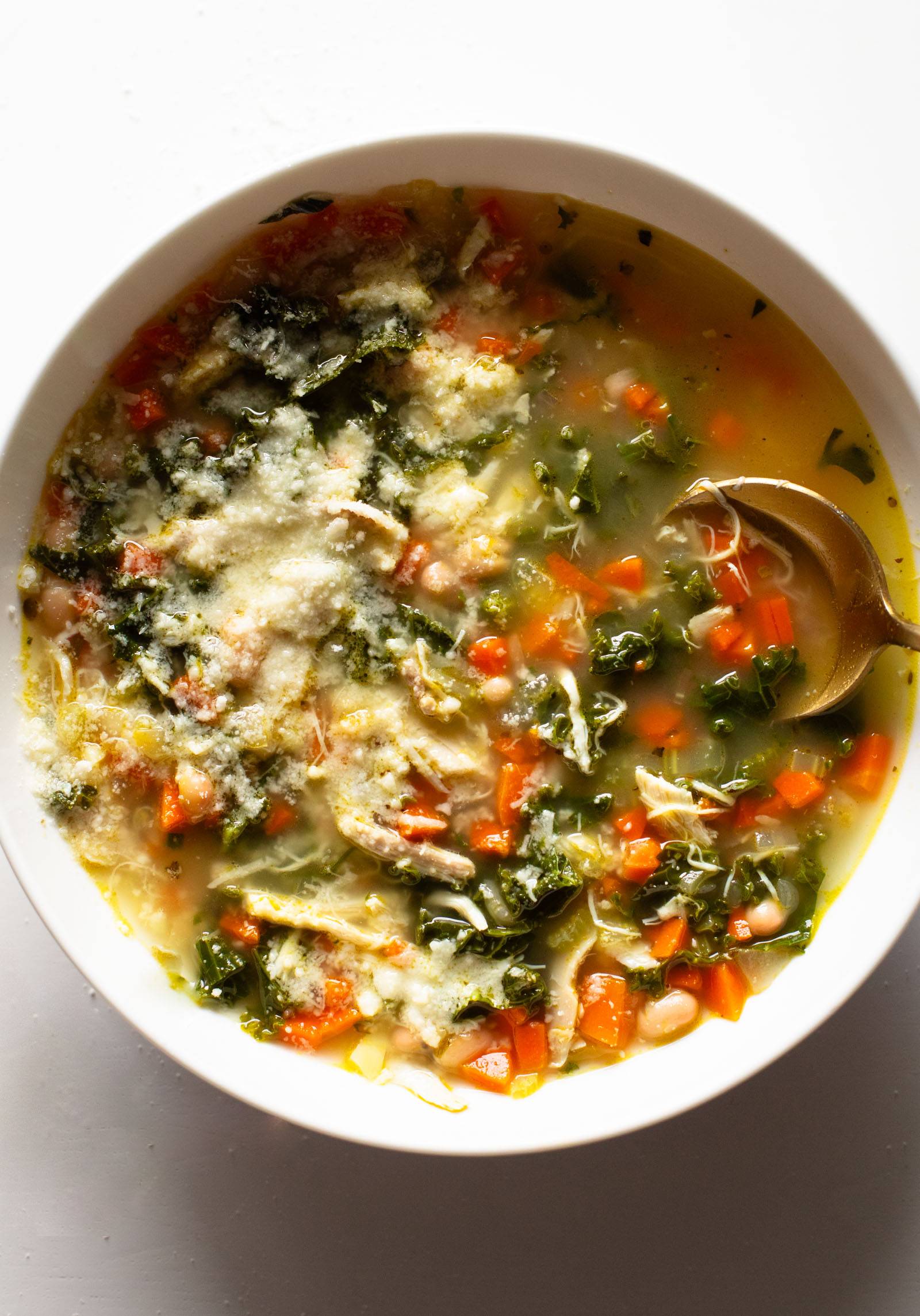
Saute Veggies: In a large soup pot, heat 1 tablespoon oil over medium high heat. Add onion, carrots, and celery. Saute for 5-8 minutes or until very soft.
Add Aromatics: Add the garlic, Italian seasoning, rosemary sprigs, thyme sprigs, and salt. Let it get nice and delicious for a minute, stirring to avoid burning or browning the garlic.
Simmer: Add the beans, kale, chicken, broth, and remaining olive oil (optional). Bring to a low simmer for 10-20 minutes, until the kale is wilted. If you have time to cook it for a while longer over low heat, great. Delicious.
Finish: Pull out the herb stems. Add lemon juice, more salt, fresh black pepper to taste (all optional and to taste)! Top with parm and serve with a thick slice of bread, a thick shmear of butter, and a pinch of rosemary salt. Fresh, bright, yummy!
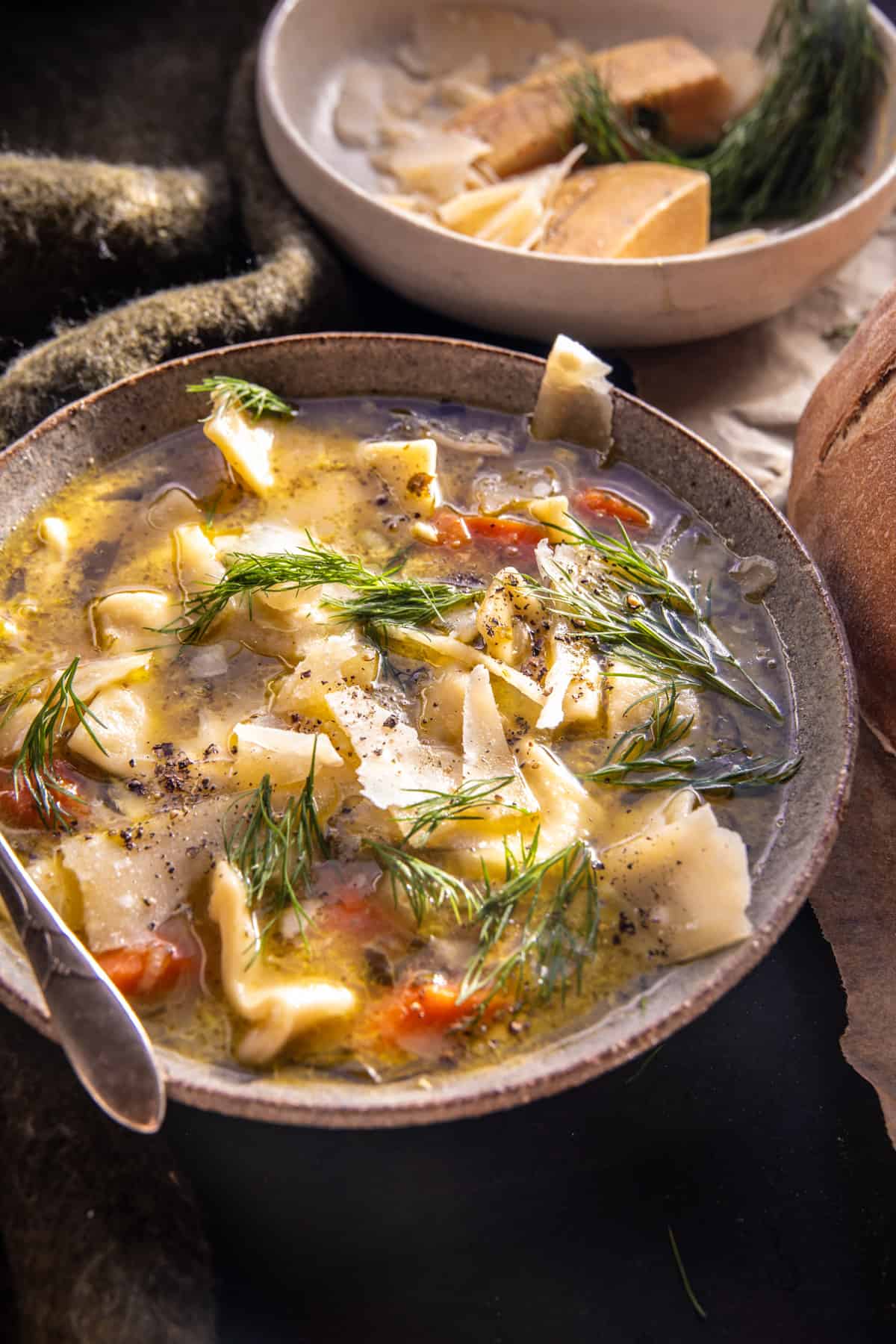
1. Melt together the olive oil and butter In a large Dutch oven over medium heat. Add the onions and cook 3-5 minutes. Add the shallots, garlic, celery, carrots, thyme, rosemary, and fennel. Season with salt and pepper. Cook another 5 minutes.
2. Pour in the broth and bring to a boil over high heat. Stir in the chicken and broccoli, and if you have one – a parmesan rind. Cover and cook for 20 minutes, until the chicken is cooked through. At this point, the soup can also simmer on low for up to 4-6 hours.
3. Shred the chicken and remove the parmesan rind. Stir in the pesto, spinach, and lemon. Taste, and season with salt and pepper. Bring the soup back to a boil, then add the noodles and cook 6-8 minutes, until soft. Stir in the parsley.
4. Serve the soup with parmesan and dill, if desired.
1. In the bowl of your crockpot, combine the olive oil, butter, onions, shallots, garlic, celery, carrots, thyme, rosemary, and fennel.
2. Pour in the broth. Stir in the chicken, broccoli, and if you have one – a parmesan rind. Season with salt and pepper. Cover and cook 3-4 hours on high, or 6-8 hours on low.
3. Crank the heat to high. Shred the chicken, remove the parmesan rind. Stir in the pesto, spinach, and lemon. Taste, and season with salt and pepper. Add the noodles and cook 10-15 minutes, until soft. Stir in the parsley.
4. Serve the soup topped with parmesan and dill, if desired.
Gather the ingredients.
:max_bytes(150000):strip_icc():format(webp)/233968-lemon-chicken-orzo-soup-DDMFS-step-1-4x3-119-009039814fb5476ea2cc81367950411a.jpg)
Bring a large pot of lightly salted water to a boil. Stir in orzo and return to a boil. Cook pasta uncovered until partially cooked through but not yet soft, about 5 minutes; drain and rinse with cold water until cooled completely.
:max_bytes(150000):strip_icc():format(webp)/233968-lemon-chicken-orzo-soup-DDMFS-step-2-4x3-127-63dc0a52e3ec44e2a9658fdb77a592b6.jpg)
Meanwhile, heat olive oil in a large pot over medium heat. Add carrots, celery, and onion; cook and stir until vegetables begin to soften and onion becomes translucent, about 5 minutes. Add garlic; cook and stir until fragrant, about 1 minute more. Season mixture with thyme, oregano, bay leaf, salt, and black pepper; continue cooking another 30 seconds before pouring chicken broth into the pot.
:max_bytes(150000):strip_icc():format(webp)/233968-lemon-chicken-orzo-soup-DDMFS-step-3-4x3-121-410e3b2e733a4382a665cb6d015d001c.jpg)
Bring broth to a boil. Partially cover the pot, reduce heat to medium-low, and simmer until vegetables are just tender, about 10 minutes.
:max_bytes(150000):strip_icc():format(webp)/233968-lemon-chicken-orzo-soup-DDMFS-step-4-4x3-124-a8b5b360990a42058fcf10816c1f4b81.jpg)
Stir orzo, lemon juice, and lemon zest into broth; add chicken. Cook until chicken and orzo are heated through, about 5 minutes. Add baby spinach; cook until spinach wilts into broth and orzo is tender, 2 to 3 minutes.
:max_bytes(150000):strip_icc():format(webp)/233968-lemon-chicken-orzo-soup-DDMFS-step-5-4x3-126-8025c468e9a841388ed8264a183dba50.jpg)
Ladle soup into bowls; garnish with lemon slices and Parmesan cheese.
:max_bytes(150000):strip_icc():format(webp)/233968-lemon-chicken-orzo-soup-DDMFS-step-6-4x3-129-25dd2cc1c682477d8e7d1e35aed85f7c.jpg)
Enjoy!
:max_bytes(150000):strip_icc():format(webp)/233968-lemon-chicken-orzo-soup-DDMFS-beauty-4x3-147-b050c9a6240d42458babf9296fa25289.jpg)
Drain zucchini: Preheat the oven to 350. In a small mixing bowl, mix the zucchini with 1/4 cup brown sugar. Transfer the mixture to a fine-mesh strainer set over the mixing bowl. Fill another small bowl with water and set it directly on top of the zucchini so that it is pushing down, pressing the water out into the bowl below.
Add wet ingredients: Line a 9×5 loaf pan with parchment paper. Whisk together the remaining brown sugar, eggs, lemon zest, and vanilla until well blended. Beat in the olive oil gradually, whisking it in until it’s thoroughly incorporated.
Add dry ingredients: Stir in the flour, salt, baking powder, baking soda, poppy seeds, nutmeg, and ginger until just combined. Add the pressed zucchini to the batter and stir it in gently until evenly incorporated.
Bake: Pour the batter into the prepared pan. Bake on the middle rack of the oven for about 1 hour and 10 minutes. The outer crust of the bread will be firm to the touch and on the darker side of golden brown (see FAQs).
Eat: Cool the bread in the pan for about 20 minutes. Remove, cut, and serve (but also see FAQs about chilling the cake which is unusually delicious).
Preheat the oven to 375 degrees F (190 degrees C). Cut six squares of aluminum foil large enough for each fillet.
Center each fillet on a foil square. Season with dill, onion powder, parsley, paprika, seasoned salt, lemon-pepper seasoning, and garlic powder, then sprinkle with lemon juice. Fold the foil squares around the fillets to make pockets. Fold the edges to seal. Place sealed packets onto a baking sheet.
Bake in the preheated oven until fish flakes easily with a fork, about 30 minutes.
Place first six ingredients (clam juice, sherry, whole milk, garlic, shallots, bay leaf) in a small saucepan.
Heat on medium high heat and let simmer until the liquids have reduced by about half.
:max_bytes(150000):strip_icc():format(webp)/__opt__aboutcom__coeus__resources__content_migration__simply_recipes__uploads__2006__01__lemon-garlic-sauce-method-1-11a4fffe129548688a454a8ddfbf165d.jpg)
In a separate saucepan (1-qt minimum) prepare the roux. Heat one tablespoon of butter in the saucepan on medium heat until it is foamy.
Sprinkle in the flour, stirring a couple of minutes with a metal whisk until well mixed (tan, but not browned).
:max_bytes(150000):strip_icc():format(webp)/__opt__aboutcom__coeus__resources__content_migration__simply_recipes__uploads__2006__01__lemon-garlic-sauce-method-2-3ee8d44edc9646f688d4c6b7cd41a590.jpg)
Slowly add the reduced mixture to the roux, stirring quickly to incorporate. When you first add some of the mixture, the roux will bubble up. Just keep adding the mixture and keep whisking to incorporate.
:max_bytes(150000):strip_icc():format(webp)/__opt__aboutcom__coeus__resources__content_migration__simply_recipes__uploads__2006__01__lemon-garlic-sauce-method-4-88c65b48723242a4bac477ffff17e923.jpg)
Lower the heat to low. Remove the bay leaf. Slowly whisk in the butter, 2 tablespoons at a time. Let the butter tablespoons fully melt and be incorporated into the sauce before adding more tablespoons.
:max_bytes(150000):strip_icc():format(webp)/__opt__aboutcom__coeus__resources__content_migration__simply_recipes__uploads__2006__01__lemon-garlic-sauce-method-5-e48841ac002e4091ab603f6aec811334.jpg)
Stir in lemon juice, salt, and white pepper. Add some more clam stock or water if the sauce is too thick.
:max_bytes(150000):strip_icc():format(webp)/__opt__aboutcom__coeus__resources__content_migration__simply_recipes__uploads__2006__01__lemon-garlic-sauce-for-seafood-vertical-a-1800-99c49233656746f78774565d76433fca.jpg)
Bring a large pot of lightly salted water to boil, add pasta, and cook for 8 to 10 minutes, or until al dente. Drain, and return pasta to the pot.
Heat olive oil in a skillet over medium heat. Cook garlic, lemon pepper seasoning, and shrimp in oil until shrimp is cooked through, 3 to 5 minutes.
Toss pasta with shrimp and Parmesan cheese.
Preheat the oven to 350 degrees F (175 degrees C). Grease and flour a 10-inch Bundt pan.
Combine cake mix, pudding mix, eggs, water, and oil in a large bowl. Beat at medium speed for 2 minutes. Pour into prepared pan.
Bake in the preheated oven until a toothpick inserted into the center of the cake comes out clean, about 50 to 60 minutes. Let cake cool in pan for 10 minutes then remove from pan and let cool completely.
Grease an 8x8-inch high-walled baking dish with nonstick cooking spray.
In a large bowl, whisk together the sugar, flour, baking powder, and salt.
Finely grate the zest from both of the lemons and set aside. Then, juice both lemons until you get 1/4 cup juice. Using a rubber spatula, mix the milk, eggs, oil, lemon juice, and half of the lemon zest into the flour mixture until just combined. Transfer the batter to the prepared baking dish.
In a small bowl, combine the sugar, flour, and remaining half of the lemon zest. Use a fork to mix. Sprinkle the mixture evenly over the cake batter. Pour the hot water evenly all over the top. Do not stir.
Bake the cake until the edges are lightly golden and it has a slight jiggle in the center, 30 to 33 minutes. Remove the cake from the oven and allow it to cool slightly and set for 10 to 15 minutes.
Dust the top of the cake with powdered sugar, if desired. Scoop out each serving with a large spoon, flipping it over as you transfer it to a bowl or plate so the pudding layer is on top, and serve warm.
Store leftover cake covered or in an airtight container in the fridge for up to 3 days. Reheat the cake in the oven at 300°F or reheat each serving for 20 seconds in the microwave.
Did you love the recipe? Give us some stars and leave a comment below!
Prepare and bake cake mix as directed on package for 13x9-inch baking pan, using the egg whites, water and oil. Remove from oven. Immediately poke holes down through cake to bottom of pan with round handle of wooden spoon. (Or, poke holes with a plastic drinking straw, using turning motion to make large holes.) Holes should be at 1-inch intervals.
Pour milk into large bowl. Add dry pudding mixes. Beat with wire whisk 2 minutes. Immediately pour about half of the thin pudding mixture evenly over warm cake and into holes to make stripes. Let remaining pudding mixture stand until slightly thickened. Spoon over top of cake, swirling to "frost" cake.
Refrigerate at least 1 hour or until ready to serve. Cut into 24 squares. Store in refrigerator.
Preheat the oven to 350 degrees F (175 degrees C). Lightly grease an 8-inch square baking dish.
Beat egg yolks, lemon juice, butter, and lemon zest together in a large bowl with an electric mixer until thick and lemon colored.
:max_bytes(150000):strip_icc()/7665-LemonPuddingCake-ddmfs-Step1-4x3-2467-72f81856fe40428980d53ffe79fba289.jpg)
Combine sugar, flour, and salt; add alternately with milk to lemon mixture, beating well after each addition.
:max_bytes(150000):strip_icc()/7665-LemonPuddingCake-ddmfs-Step2-4x3-2470-e540efd2a361457fae16d29cc8fe5ce4.jpg)
Beat egg whites in a glass, metal, or ceramic bowl until stiff.
:max_bytes(150000):strip_icc()/7665-LemonPuddingCake-ddmfs-Step3-4x3-2472-b9d4900bae9c4e2eb703d8c8cd97a288.jpg)
Gently blend egg whites into batter on low speed with an electric mixer. Pour into prepared baking dish.
:max_bytes(150000):strip_icc()/7665-LemonPuddingCake-ddmfs-Step5-4x3-2485-66746c37274f4b29ac0a859781b9909a.jpg)
Place a pan of hot water in the preheated oven; set the baking dish into the pan; bake for 45 minutes. For best results, serve warm.
:max_bytes(150000):strip_icc()/7665-Lemon-Pudding-Cake-ddmfs-4x3-2634-f0a57bcf22fb403192a8ef490c2a7696.jpg)
Preheat oven to 350 degrees F (175 degrees C). Grease and flour an 8 inch square pan.
In a large bowl, combine sugar, salt and melted butter. Beat in the flour. Stir in the lemon zest and lemon juice. Combine milk and egg yolks, and add to lemon mixture.
In a large glass or metal mixing bowl, beat egg whites until stiff peaks form. Fold 1/3 of the whites into the batter, then quickly fold in remaining whites until no streaks remain. Pour batter into prepared pan.
Set cake pan in a water bath. Bake in the preheated oven for 40 minutes, or until top is lightly browned. Serve warm or cold.
Combine sugar, cornstarch, and salt in the top of a double boiler over simmering water; stir well to prevent clumps. Gradually stir in 5 cups water. Cook, stirring frequently, until mixture is thickened to gravy consistency, 5 to 7 minutes. Remove from heat.
Beat eggs in a bowl until light and foamy. Pour in 1 cup of the sugar mixture gradually, whisking vigorously to avoid curdling eggs. Whisk egg mixture into remaining sugar mixture gradually; return to double boiler. Cook, whisking constantly, until thickened to pudding consistency, 6 to 8 minutes. Whisk lemon juice and butter into pudding gradually. Cool in the refrigerator, 30 minutes to 1 hour.
Beat heavy cream in a chilled glass or metal bowl with an electric mixer until frothy. Add confectioners' sugar gradually, continuing to beat until stiff peaks form, starting on low speed and increasing to high speed, for about 2 minutes; set aside.
Beat cream cheese in a bowl with an electric mixer until lump free, 1 to 2 minutes. Add the lemon curd and vanilla extract and mix until smooth and creamy, 1 to 2 minutes.
Fold whipped cream into the lemon mixture until just combined. Divide mousse equally among 4 dessert dishes or ramekins. Chill for at least 1 hour before serving.
Garnish with fresh berries and mint leaves.
Bring chicken broth and quinoa to a boil in a saucepan. Reduce heat to medium-low, cover, and simmer until quinoa is tender and broth has been absorbed, 15 to 20 minutes.
Combine quinoa, lemon zest, and lemon juice in a bowl. Stir in red peppers, cranberries, onion, and basil until combined.
:max_bytes(150000):strip_icc()/1129201-c2b829fd94cc4940bb20f3e24fed2eeb.jpg)
Lightly coat (or oil) six 6-ounce ramekins with cooking spray.
Pour lemon juice into a small bowl; sprinkle with gelatin. Let sit until gelatin softened, about 5 minutes; mix well. Set aside.
Combine heavy cream, half and half, and 2 teaspoons lemon zest in a saucepan over low heat. Add sugar, stirring frequently, until sugar completely dissolved; heat slowly until just about to boil, about 15 minutes. Remove from heat.
Whisk gelatin mixture and vanilla extract into cream mixture until well blended and gelatin is completely dissolved; continue to lightly whisk until mixture comes close to room temperature, about 10 minutes. This will prevent the gelatin and cream from separating while panna cotta is setting.
Divide mixture into ramekins, about 1/2 cup per portion. Cover each ramekin with plastic wrap; refrigerate until set, about 4 hours.
Run a knife around inside edges of ramekins. Carefully dip each ramekin into a bowl of hot water 3 to 5 seconds. Carefully invert onto serving plates, tap, and jiggle ramekins a bit, if needed, to release panna cotta onto plates.
Garnish with lemon zest and mint leaves; serve with fresh blueberries.
Place lemon juice in a small bowl and sprinkle the unflavored gelatin over it. Let stand for about 15 minutes until gelatin softens.
Combine heavy cream, sugar, and 2 tablespoons lemon zest in a saucepan over medium-low heat; bring to a simmer. Whisk in gelatin mixture until dissolved. Remove from heat and stir in orange liqueur.
Strain the cream mixture into a medium bowl and divide evenly among small glass bowls or ramekins.
Place uncovered panna cottas into the refrigerator until set, at least 4 hours. If time permits, cover the bowls with plastic wrap and chill overnight.
Garnish with remaining lemon zest before serving.
Bring cream, 1/2 cup sugar and lemon zest to a simmer in a large saucepan over medium-low heat. Meanwhile, in a small bowl, soften gelatin in 2 generous Tbs. cold water. Whisk softened gelatin and 2 Tbs. orange liqueur into cream mixture.
Pour cream mixture into 8 4-ounce ramekins or custard cups that have been lightly coated with vegetable cooking spray (blot excess oil with a paper towel). Set custard cups in a shallow pan, cover with plastic wrap and refrigerate until set, at least 4 hours, preferably overnight.
Partially thaw raspberries on countertop. Place in a food processor fitted with the metal blade and add remaining 6 Tbs. sugar and 2 Tbs. orange liqueur. Transfer sauce to a medium bowl (if you want a seedless sauce, strain first through a fine-mesh sieve). Stir in fresh raspberries, and let stand about 1 hour.
When ready to serve, run a thin-bladed knife around each dessert to loosen; turn onto a dessert plate to unmold. Spoon raspberry sauce around panna cotta and serve.
Combine olive oil, lemon juice, green onions, parsley, rosemary, thyme, salt, black pepper, and garlic powder in a small bowl; reserve 1/4 cup for basting.
Place salmon fillets in a shallow dish and pour remaining marinade on top. Cover and refrigerate for 30 minutes.
Preheat the grill for medium heat and lightly oil the grate.
Remove fillets from the refrigerator; discard marinade. Place fillets on the preheated grill skin-side down. Cook, basting occasionally with reserved marinade, until fish flakes easily with a fork, 15 to 20 minutes.
Preheat the oven to 350 degrees F (175 degrees C).
Combine flour, baking powder, salt, and 1/2 cup sugar in a large bowl. Add oil, egg yolks, water, and lemon zest; beat with an electric mixer until smooth.
Beat egg whites and cream of tartar in a separate clean bowl until peaks form. Gradually add 3/4 cup sugar, and beat until very stiff and shiny peaks form. Fold 1/3 of the whites into the batter, then quickly fold in remaining whites until no streaks remain. Turn batter into ungreased 10-inch tube pan.
Bake in the preheated oven until a toothpick inserted in the center comes out clean, about 1 hour. Invert cake and cool completely in pan. When cool, loosen edges and shake pan to remove cake.
To make the filling: Beat cream in a chilled glass or metal bowl with an electric mixer until soft peaks form. Fold in lemon filling; chill filling until stiff.
To assemble the cake: Slice cake horizontally into 3 equal layers. Fill layers with 1/3 cup of filling. Spread remaining filling on top layer. Decorate with lemon slices, if using.
Preheat the oven to 350 degrees F (175 degrees C).
Cream butter in a large bowl. Mix in sugar, lemon juice, flour, and lemon zest. Beat in egg yolks, then milk.
Beat egg whites in a large glass or metal mixing bowl until stiff peaks form. Gently fold into the lemon mixture. Pour filling into pie crust. Scatter blueberries evenly over the top.
Bake in the preheated oven until filling is set, approximately 50 minutes. Cover the pie with foil after about 30 minutes to avoid browning. Allow to cool slightly before serving.
1. Pat the shrimp dry. In a bowl, toss the shrimp with the flour, paprika, cayenne, 1 teaspoon pepper, and 1 teaspoon salt.
2. Heat the olive oil in a large skillet over medium heat. Add the shrimp and cook until pink, about 2 minutes per side. Remove from the skillet to a plate. Set aside.
3. If needed, let the skillet cool slightly. Melt 2 tablespoons butter and the garlic together over medium heat. Cook until the garlic begins to turn golden, 2-3 minutes. Melt in 4 more tablespoons butter. Add the shrimp and toss. Cook 2-3 minutes, until the shrimp is warmed and the garlic is dark golden and crisp. Squeeze over the lemon juice, remove from the heat.
4. To make the lemon pepper sauce, whisk together all ingredients in a bowl. Season with salt and pepper.
5. Serve the shrimp with the garlic butter spooned over top. Add rice, lemon wedges, lemon pepper sauce, and chili sauce on the side.
Combine sugar, cornstarch, and salt in the top of a double boiler over simmering water. Stir frequently, scraping down the sides with a rubber spatula to avoid scorching, until sugar is melted, 3 to 5 minutes.
Whisk water and egg yolks together in a small bowl; pour into sugar the mixture, whisking until fully incorporated. Cook, stirring constantly, until the mixture thickens, 3 to 5 minutes.
Remove from the heat and stir in lemon juice and butter until incorporated. Cover with plastic wrap and let sit until completely cooled.
In a medium bowl, cream together butter and 1 cup sugar until light and fluffy. Beat in egg, corn syrup, and lemon extract. Stir in flour, baking soda, and baking powder. Cover dough, and chill in the refrigerator at least 1 hour.
Preheat oven to 325 degrees F (165 degrees C). Line a cookie sheet with parchment paper. Roll chilled dough into walnut sized balls. Roll balls in remaining sugar, and place on the prepared cookie sheet.
Bake 12 minutes in the preheated oven, or until lightly browned.
1. Cook the bacon in a large skillet set over medium heat until crispy, 5-8 minutes. Remove the bacon from the skillet. Set aside. Discard any excess bacon grease.
2. Meanwhile, bring a large pot of salted water to a boil and cook the pasta according to package directions, until al dente. Just before draining, reserve 1 1/4 cups of pasta cooking water. Drain.
3. Working in the same skillet used to cook the bacon, add 2 tablespoons of butter, the pine nuts, if using, garlic, lemon zest, and pepper. Cook 1-2 minutes, until toasted. Add 4 tablespoons of butter, and lemon juice, whisking until smooth. Whisk in 1 cup pasta cooking water, the parmesan, and pecorino. Toss vigorously to melt the cheese. Add the pasta, the remaining 1/4 cup of water, the arugula, and basil. Then season with salt. Toss well.
4. Plate the pasta. Then add the bacon and top with fresh parmesan, cracked pepper, and basil. Eat!
1. To make the dough. In the bowl of a stand mixer fitted with the dough hook, combine the milk, yeast, and honey. Let sit 5-10 minutes, until bubbly on top. Add 3 ½ cups flour, the cardamom, salt, eggs, melted butter, and 1 tablespoon lemon zest. Using the dough hook, mix until the flour is completely incorporated, about 4-5 minutes. If the dough seems sticky, add the remaining ½ cup of flour.
2. Cover the bowl and let sit at room temperature for 1 hour or until the dough has doubled in size.
3. To make the filling. In a small bowl, combine the sugar and the remaining 1-2 tablespoons lemon zest. Line a 9×13 inch baking dish with parchment.
4. Lightly dust your work surface with flour. Turn out the dough, punch it down, and roll it into a rectangle about 10 x 16 inches. Spread 6 tablespoons softened butter evenly over the dough. Sprinkle the lemon sugar evenly over the butter and lightly push into the butter. Starting with the long edge closest to you, carefully roll the dough into a log, keeping it fairly tight as you go. When you reach the edge, pinch along the edge to seal. Using a sharp knife, cut the log into 12-16 rolls. Place the rolls in the prepared baking dish. Cover and let rise 20-30 minutes or transfer to the fridge to rise overnight (see notes).
5. Preheat the oven to 375° F. Bake the rolls for 20 to 25 minutes, or until golden brown.
6. Meanwhile, make the icing. Beat together the cream cheese, butter, powdered sugar, and vanilla until light and creamy.
7. Spread the icing over the warm rolls. Serve warm and enjoy!
1. Preheat oven to 350° F. Line a 9×13 inch baking dish with parchment paper.
2. In a large bowl, beat together the coconut oil, sour cream, eggs, sugar, lemon zest, lemon juice, and vanilla. Add the flour, baking powder, baking soda, and salt. Mix until just combined, then slowly beat in the milk until fully combined
3. Pour the batter into the prepared pan. Bake 30-35 minutes, until the top is just set and no longer wiggly in the center. Remove and let cool.
4. To make the topping. In a small saucepan bring the lemon juice and honey to a boil over high heat. Boil 1-2 minutes, until just slightly thickened. Remove from the heat and stir in the coconut. Evenly spoon the syrup over the cake, then let cool.
5. To make the frosting: In a stand mixer, beat together the cream cheese until whipped. Add the butter and beat until light and fluffy, about 2 minutes. Add the powdered sugar, and vanilla. Beat until the frosting is light and fluffy. Frost the cake all over (decorating directions in notes).
Preheat the oven to 350 degrees F (175 degrees C). Grease a 9x13-inch cake pan with nonstick cooking spray.
Mix together cake mix, water, eggs, and oil in a large bowl until well blended. Pour into the prepared pan.
Bake in the preheated oven until a toothpick inserted into the center comes out clean, 20 to 27 minutes. Transfer cake to a wire rack and cool for 15 minutes.
Poke holes into the top of cake with the handle of a wooden spoon, about 1/2 inch apart.
Pour lemon curd over cake and spread with a spatula until absorbed into the holes. Refrigerate for 1 hour.
Frost with whipped topping and sprinkle with lemon zest. Keep refrigerated until serving.
Preheat the oven to 350 degrees F (175 degrees C). Grease and flour a 9x13-inch baking pan.
To make the cake: Stir cake mix and instant pudding together in a large bowl. Add water, oil, and eggs; mix until smooth and well blended. Spread batter evenly into the prepared pan.
Bake in the preheated oven until a toothpick inserted comes out clean, about 40 to 45 minutes. While cake is still hot, poke holes in the top with a fork.
To make the sweet lemon glaze: Mix lemon juice and confectioners sugar together in a small bowl until smooth; pour over hot cake and allow to seep into the holes. Let cake cool completely before serving.
Prepare lemon curd filling: Cut butter into small pieces and set aside.
Separate eggs, placing yolks in a heat-proof bowl and whites in glass, metal, or ceramic bowl. Cover egg whites and leave on the counter to come to room temperature for the meringue.
Add lemon zest, salt, sugar, and lemon juice to egg yolks. Whisk until thoroughly combined.
Add 1 to 2 inches water to a saucepan over low heat; bring to a simmer. Place bowl of filling over the simmering water. Cook, stirring constantly with a spatula, until mixture is very hot to the touch and thick enough to coat the back of a spoon, 10 to 15 minutes.
Stir in butter, 3 or 4 pieces at a time, waiting until butter has melted before each addition. Remove from the heat and pour filling into a bowl to cool, about 15 minutes. Lay plastic wrap on top of the filling, pressing down so it doesn't develop a skin, and place in the refrigerator until well chilled, 2 to 3 hours.
Preheat the oven to 250 degrees F (120 degrees C). Line a baking sheet with a silicone liner, such as Silpat®. Lightly spray with cooking spray.
Begin meringue: Mix cornstarch into sugar and set aside.
Add cream of tartar, lemon juice, and vanilla to the reserved egg whites. Whisk with a large whisk until very soft peaks form, about 3 minutes. Whisk in sugar mixture, 2 tablespoons at a time, whisking about 1 minute between each addition, until incorporated. When all sugar mixture has been added, continue to whisk until relatively stiff peaks form and whites are firm enough to hold their shape.
Use 2 spoons or a piping bag to transfer whites onto the prepared baking sheet, forming a ring of dollops about 8 or 9 inches across. Fill in the middle with meringue, then go back around the edges adding more meringue to build up the outside edge.
Bake in the center of the preheated oven for exactly 1 hour. At 1 hour, turn off the oven and crack the door. Let meringue sit in the oven until its cooled completely, about 1 hour.
Meanwhile, prepare blueberry sauce: combine 1 cup blueberries, sugar, and water in a saucepan over medium heat; bring to a simmer. Cook, stirring occasionally, until blueberries collapse and liquid thickens, about 10 minutes.
Remove from the heat and pass through a fine mesh strainer. Place in the refrigerator until fully chilled, about 45 minutes.
Very carefully transfer cooled meringue to a serving platter using 2 large spatulas if necessary; you may get some cracks but that's okay. Use a spoon to crack the center a bit to make room for the filling.
Fill the center with chilled lemon curd filling. Place remaining blueberries over top and drizzle with blueberry sauce. Garnish with mint.
:max_bytes(150000):strip_icc()/image-222-c8d631b51cb44b98ab2e614e527e3c30.jpg)
1. In a bowl, mix the olive oil, tomato paste, garlic, lemon zest, paprika, onion powder, cayenne, honey, salt, and pepper. Mix in the chicken, tossing to coat. Thread the chicken onto skewers.
2. Set your grill, grill pan, or skillet to medium-high heat. Grill the skewers and corn until lightly charred and cooked through, turning them occasionally throughout cooking, about 10 to 12 minutes total (baking directions in notes).
3. Meanwhile, make the feta sauce. Combine all ingredients in a blender and blend until smooth. Stir in a pinch of paprika and chili flakes.
4. Remove the corn from the cob. Toss the corn with the avocado, green onions, herbs, lemon juice, salt, and pepper.
5. Serve the chicken with the corn salad and feta sauce for dipping. Enjoy!
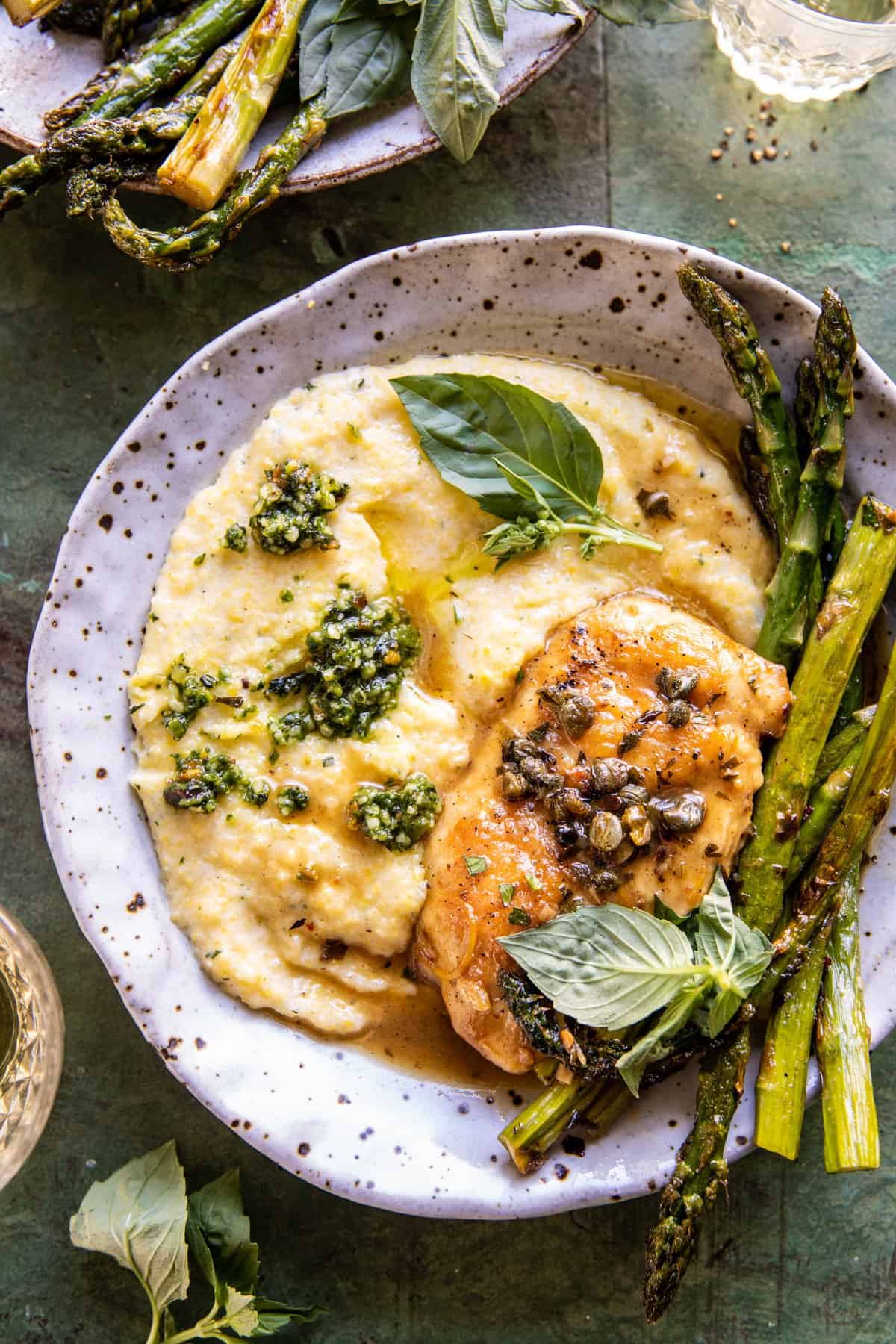
1. Season the chicken with salt and pepper. Place the flour and parmesan in a shallow bowl and dredge the chicken through the flour mix, pressing to adhere.
2. Heat the olive oil in a large skillet over medium-high heat. Add the chicken and sear on both sides until golden, about 3-5 minutes per side. Remove the chicken from the skillet.
3. To the same skillet, add the butter, asparagus, and a pinch each of salt and pepper. Cook until just tender, about 5 minutes. Add the garlic, capers, and thyme, cook another 2 minutes. Pour in the wine and lemon juice, cook 1 minute. Return the chicken to the pan and simmer for 5 minutes, until warmed through.
4. Meanwhile, make the polenta. Bring 3 cups water to a boil over medium heat in a medium pot. Whisk in the polenta, stirring until the polenta is soft and thickening, 5 minutes. Stir in the butter, parmesan, and 2 tablespoons pesto.
5. Spoon the polenta onto plates. Add the chicken and asparagus. Then spoon over the pan sauce. Finish with basil.
Gather the ingredients. Preheat the oven to 350 degrees F (175 degrees C).
:max_bytes(150000):strip_icc()/276739-lemon-spritz-cookies-DDMFS-step-01-02f080aa4a0144f0ab45f0fc9ecbe8af.jpg)
Beat butter and cream cheese together in a bowl using an electric mixer until creamy. Mix in sugar until light and fluffy. Add egg yolk, lemon zest, lemon extract, and vanilla extract. Mix well. Add flour and salt gradually until dough is combined.
:max_bytes(150000):strip_icc()/276739-lemon-spritz-cookies-DDMFS-step-02-d0b7f44df26a4d5e94fd79240cdc2564.jpg)
Shape dough into small logs; place a log into a cookie press and press out onto ungreased cookie sheets. Repeat with remaining dough logs.
:max_bytes(150000):strip_icc()/276739-lemon-spritz-cookies-DDMFS-step-03-3cb1bc6e027b4da59b2e019f98feb259.jpg)
Bake in the preheated oven until lightly browned, 12 to 14 minutes.
:max_bytes(150000):strip_icc()/276739-lemon-spritz-cookies-DDMFS-step-04-a02ae44212624a77b1a2f25554ce7e8f.jpg)
Line a 9x9-inch baking pan with parchment paper.
In a medium mixing bowl, stir together the graham cracker crumbs, sugar, cinnamon, and salt with a rubber spatula. Add the melted butter and mix until the crumbs are evenly moistened and the mixture looks sandy. Break up any large clumps with the spatula.
Transfer the crumb mixture to the lined baking dish. Use your hand or the bottom of a measuring cup to press the crumbs firmly into an even layer in the bottom of the pan.
Simply Recipes / Mark Beahm
:max_bytes(150000):strip_icc()/SimplyRecipes_LemonCheesecakeBars_METHOD-3-8ad9f0504475492caa0e96edc8f17554.jpg)
Bake the crust in the preheated oven until it begins to turn golden on the edges, about 10 minutes. Remove the pan from the oven and set it on a cooling rack to cool while making the filling.
Reduce the oven temperature to 325°F.
In the bowl of a stand mixer fitted with the paddle attachment or in a large mixing bowl with a hand mixer, beat the cream cheese, sugar, and flour on medium-low speed until smooth, about 2 minutes.
Add the eggs one at a time, beating well at medium-low speed after each addition. Scrape down the bottom and sides of the bowl with a rubber spatula.
Add the sour cream, lemon zest, lemon juice, and vanilla extract. Mix on low speed until just combined. Do not overmix.
Simply Recipes / Mark Beahm
:max_bytes(150000):strip_icc()/SimplyRecipes_LemonCheesecakeBars_METHOD-5-03fbcdc6f9674668b41a7cfdd27775ee.jpg)
Pour the cheesecake batter over the graham cracker crust and spread it into an even layer. Spoon rounded tablespoonful dollops of the lemon curd over the filling and use an offset spatula or butter knife to carefully swirl it into the batter. Avoid cutting into the crust.
Bake at 325°F until the filling is just set and only slightly jiggly in the center, about 30 minutes.
Simply Recipes / Mark Beahm
:max_bytes(150000):strip_icc()/SimplyRecipes_LemonCheesecakeBars_METHOD-10-7be6042fc5a24e5d8c4142121d8e96ee.jpg)
Turn off the oven, leave the door ajar, and let the bars cool in the oven for 30 minutes.
If your oven door won’t stay ajar, wedge it open with the handle of a wooden spoon.
Remove the bars from the oven and let them cool to room temperature. Refrigerate the bars until thoroughly chilled, at least 3 hours.
The bars will keep in an airtight container in the refrigerator for up to 5 days.
Love the recipe? Leave us stars and a review below!
Simply Recipes / Mark Beahm
:max_bytes(150000):strip_icc()/SimplyRecipes_LemonCheesecakeBars_METHOD-12-7c8aeed389724358a5e8e9d75650f8f5.jpg)
Preheat the oven to 350 degrees F (175 degrees C).
Stir flour, oats, and 3/4 cup brown sugar together in a medium bowl. Cut in butter until mixture is crumbly. Reserve 1 1/2 cups of this mixture and press remaining mixture into the bottom of a 9x13-inch pan.
Bake crust in the preheated oven for 15 minutes .
Meanwhile, beat cream cheese with sweetened condensed milk in a small bowl until light and fluffy. Stir in lemon juice and spread mixture evenly over prepared crust. Empty cranberry sauce into a small bowl and stir in cornstarch and brown sugar. Spoon over cream cheese layer. Sprinkle top with reserved crust mixture.
Bake in the preheated oven until top is golden, about 35 to 40 minutes. Let cool completely before cutting into bars. Store covered in the refrigerator.
Preheat the oven to 350 degrees F (175 degrees C). Line a 9x13-inch baking pan with aluminum foil.
Mix shortbread crumbs, flour, and brown sugar in a medium bowl. Cut in butter using 2 knives or a pastry blender until mixture resembles coarse crumbs. Press over the bottom of the prepared pan.
Bake in the preheated oven for 15 minutes.
Meanwhile, beat cream cheese and white sugar using an electric mixer until well blended. Add eggs and flour. Mix well. Blend in lemon juice, lemon zest, and baking powder. Pour filling over the crust.
Bake in the preheated oven until center is set, 25 to 28 minutes. Let cool completely, at least 45 minutes. Refrigerate until well chilled, about 2 hours. Sprinkle with confectioners' sugar right before serving.
:max_bytes(150000):strip_icc()/2339817-869ab9081c4a4ffa9174db36560fa2d2.jpg)
Gather all ingredients. Preheat the oven to 325 degrees F (165 degrees C).
:max_bytes(150000):strip_icc():format(webp)/AR-244929_Lemon-Meringue-Cheesecake-DDMFS-4x3-Ingredients-0ba122ff36254d70a2ead73b85cdfda9.jpg)
To make the crust: Mix cookie crumbs and melted butter together in a bowl until evenly combined.
:max_bytes(150000):strip_icc():format(webp)/AR-244929_Lemon-Meringue-Cheesecake-DDMFS-4x3-Step-02-d04dca087b17406daa281944b373596b.jpg)
Press into the bottom of a 9-inch springform pan.
:max_bytes(150000):strip_icc():format(webp)/AR-244929_Lemon-Meringue-Cheesecake-DDMFS-4x3-Step-03-836e0d60596c4b76a6e20f94d0de017c.jpg)
To make the filling: Beat cream cheese, sour cream, and sugar together in a bowl with an electric mixer until smooth and creamy.
:max_bytes(150000):strip_icc():format(webp)/AR-244929_Lemon-Meringue-Cheesecake-DDMFS-4x3-Step-04-b9488ca07a58454db1e4f76354634776.jpg)
Add eggs, one at a time, beating well after each addition. Mix in lemon juice, lemon zest, and vanilla until smooth, scraping the bottom and sides of the bowl as needed.
:max_bytes(150000):strip_icc():format(webp)/AR-244929_Lemon-Meringue-Cheesecake-DDMFS-4x3-Step-05-82c640a2bca04ec0bee8714ff18df6f0.jpg)
Spread mixture over crust in the springform pan.
:max_bytes(150000):strip_icc():format(webp)/AR-244929_Lemon-Meringue-Cheesecake-DDMFS-4x3-Step-06-6c63a3c44a874fcea7d5d3eaf7b8e73b.jpg)
Bake in the preheated oven until edges are puffed and surface of cheesecake is firm except for a small spot in the center that will jiggle when the pan is gently shaken, about 1 hour.
:max_bytes(150000):strip_icc():format(webp)/AR-244929_Lemon-Meringue-Cheesecake-DDMFS-4x3-Step-07-4dcfe15a59714e989d85a1116e9eb8bd.jpg)
Let cool to room temperature, about 1 hour, then refrigerate until completely cooled, at least 3 to 4 hours.
:max_bytes(150000):strip_icc():format(webp)/AR-244929_Lemon-Meringue-Cheesecake-DDMFS-4x3-Step-08-b6fe721bd72542079f223a71b001e071.jpg)
To make the meringue topping: Preheat the oven to 375 degrees F (190 degrees C). Beat egg whites in a bowl with an electric mixer until soft peaks form.
:max_bytes(150000):strip_icc():format(webp)/AR-244929_Lemon-Meringue-Cheesecake-DDMFS-4x3-Step-09-a7c8b2bdf42a4c6ba6bc9b9a79dc5995.jpg)
Beat in sugar and cream of tartar until mixture is glossy and stiff peaks form.
:max_bytes(150000):strip_icc():format(webp)/AR-244929_Lemon-Meringue-Cheesecake-DDMFS-4x3-Step-10-cbefc8ec8e76437491913809c5408cc5.jpg)
Spread lemon curd over chilled cheesecake.
:max_bytes(150000):strip_icc():format(webp)/AR-244929_Lemon-Meringue-Cheesecake-DDMFS-4x3-Step-11-A-9062c924d8ea4bd98816d690396baa56.jpg)
Mound whipped egg whites over top and spread until curd is completely covered.
:max_bytes(150000):strip_icc():format(webp)/AR-244929_Lemon-Meringue-Cheesecake-DDMFS-4x3-Step-12-B-06697ac452f94bbe9c27eb8b335b3c07.jpg)
Bake in the preheated oven until meringue is golden brown, about 10 minutes.
:max_bytes(150000):strip_icc():format(webp)/AR-244929_Lemon-Meringue-Cheesecake-DDMFS-4x3-Step-13-74039186c8f0460c884af2337ef0c485.jpg)
Remove from the oven and chill, uncovered, in the refrigerator for at least 1 hour or up to 1 day before serving. It's best not to cover the meringue or it may collapse.
:max_bytes(150000):strip_icc():format(webp)/AR-244929_Lemon-Meringue-Cheesecake-DDMFS-4x3-df1a689ad3394c42a44fc4d649a24ef2.jpg)
Preheat the oven to 350°F.
On a baking sheet, place a sheet of aluminum foil large enough to wrap around the outside of the springform pan. Set it aside.
To make the crust, place the cookies into the bowl of a food processor and process until you get fine, even crumbs. Mix the cookie crumbs with the melted butter, sugar, and salt until you get the consistency of wet sand, and the mixture clumps together when squeezed in the palm of your hand.
Press the crust mixture into the bottom of a 10-inch springform pan in an even layer. You can either keep the crust layer only on the bottom, or on the bottom and pressed up against the sides. It is totally up to you!
Bake for 15 minutes. Remove from the oven and set on a cooling rack while you prepare the cheesecake filling.
:max_bytes(150000):strip_icc():format(webp)/__opt__aboutcom__coeus__resources__content_migration__simply_recipes__uploads__2019__05__lemon_cheesecake_prep2-1223110f5daf4a67b94db1c5b1cabfd2.jpg)
Turn the oven down to 325°F. Place a 9x13-inch baking dish on the lower rack of the oven and fill with boiling water; this will create a steamy environment for the cheesecake to bake.
In the bowl of a stand mixer (or using a mixing bowl and hand mixer), beat the cream cheese until smooth and creamy, scraping the sides of the bowl a few times so there are no lumps of firm cream cheese. Beat in the sugar, lemon zest, and salt, then scrape down the sides.
Beat in the eggs one at a time, mixing until each egg is combined and scraping down the sides and bottom of the bowl after each addition. Resist the urge to whip the mixture too much; just beat in each egg until mixed well—over-beating can pull too much air into the batter, resulting in a cracked cheesecake.
:max_bytes(150000):strip_icc():format(webp)/__opt__aboutcom__coeus__resources__content_migration__simply_recipes__uploads__2019__05__lemon_cheesecake_prep9-9ecbe5a89bd1478f9710581346fcdf59.jpg)
On low speed, beat in the sour cream until just combined and scrape down the sides. Spread the cheesecake filling into the pre-baked crust.
:max_bytes(150000):strip_icc():format(webp)/__opt__aboutcom__coeus__resources__content_migration__simply_recipes__uploads__2019__05__lemon_cheesecake_prep13-61fed10d465e4cdfb4c0ec2fa5e528d3.jpg)
Put the cheesecake onto the foil-lined baking sheet. Press the foil up and around the outside of the springform pan.
Place the baking sheet with the cheesecake on it on the center rack of the oven, above the pan of hot water. Bake until the cheesecake appears set and dry on top but still jiggles in the center like Jello, about 1 hour.
:max_bytes(150000):strip_icc():format(webp)/__opt__aboutcom__coeus__resources__content_migration__simply_recipes__uploads__2019__05__lemon_cheesecake_prep17-3dd8aeba92ce4e3ca29077de5433efa4.jpg)
Turn off the oven and allow the cheesecake to cool for 60 minutes with the oven door closed.
Crack open the oven door (place a wooden spoon between the door and the frame of the oven to keep it just cracked) and allow the cheesecake to cool for an additional 45 minutes before removing from the oven to cool on a baking rack, until it reaches room temperature.
The cheesecake may have domed slightly while baking but should deflate to a flat top with a small ridge around the edge, as it slowly cools.
Remove the foil once the cheesecake has cooled to room temperature (anytime after the cheesecake has pulled away from the edges of the pan and it's cool enough to handle).
Simply Recipes / Cindy Rahe
:max_bytes(150000):strip_icc():format(webp)/__opt__aboutcom__coeus__resources__content_migration__simply_recipes__uploads__2019__05__lemon_cheesecake_prep19-6aee3febdce04843be92918ac11a295d.jpg)
Once the cheesecake is at room temperature, transfer it to the refrigerator to chill for at least 6 hours before serving.
To create the petal pattern as shown in the photos, pipe or dollop small blobs of curd in a ring around the perimeter of the cheesecake, leaving about 1/2-inch border.
Using an offset spatula or the back of a teaspoon, gently smash and drag the blobs toward the center of the cheesecake. If you have leftover lemon curd, serve the rest when you slice the cheesecake.
:max_bytes(150000):strip_icc():format(webp)/__opt__aboutcom__coeus__resources__content_migration__simply_recipes__uploads__2019__05__lemon_cheesecake_hero1-384c719c794043c9917bf4e16c68c73b.jpg)
Preheat the oven to 350 degrees F (175 degrees C). Grease a tart pan with a removable bottom or an 8-inch square baking dish.
To make the crust: Mix softened butter and confectioners' sugar together in a bowl until very smooth; stir in flour. Press dough into the prepared baking pan; pierce with a fork in several places to prevent crust from puffing up during baking.
Bake in the preheated oven until light golden brown, 10 to 15 minutes. Remove from the oven and let cool while you make the filling. Leave the oven on.
To make the filling: Whisk white sugar and eggs together in a bowl. Whisk in flour, lemon juice, lemon zest, and salt until thoroughly combined; pour into cooled crust.
Bake until filling is set, 20 to 25 minutes. Let cool completely, then dust with confectioners' sugar. Serve immediately or refrigerate and serve chilled.
Place lemon zest in a saucepan and cover with water by 1/2 inch. Bring to a boil. Remove from heat and drain the water. Fill up with water again and repeat. Bring to a boil, remove from heat, then drain.
Add water again, this time adding the sugar as well. Simmer for 30 minutes, then drain.
Simply Recipes /Elise Bauer
:max_bytes(150000):strip_icc():format(webp)/__opt__aboutcom__coeus__resources__content_migration__simply_recipes__uploads__2008__04__lemon-zest-boiling-water-5c0af5595ce34daf96fbbb42ac90e935.jpg)
Spread the zest out on a sheet of parchment paper. Let dry overnight at room temperature (Do not put in the refrigerator!).
(Tip: If you wrap the zest strands around a chopstick and let them dry wrapped, then the next day when you unwrap them, they'll hold a curly form.)
The next day, toss the zest with a little more sugar.
Whisk together the flour, salt, and powdered sugar in a bowl. Add the butter, and either use your (clean) fingers or a pastry blender to mix the butter into the flour until the dough forms flaky crumbs and lumps. Try to make sure all of the flour is coated with some butter.
Simply Recipes /Elise Bauer
With a wooden spoon, mix in the egg, 1/4 teaspoon almond extract, and 1 teaspoon lemon zest. Continue to mix until the dough clumps.
Simply Recipes /Elise Bauer
:max_bytes(150000):strip_icc():format(webp)/__opt__aboutcom__coeus__resources__content_migration__simply_recipes__uploads__2008__04__work-butter-into-flour-for-lemon-tart-dough-5b309abb12f84b05b13a3009da3d49b0.jpg)
Shape into a ball and flatten into a disk. Wrap the disk in plastic, and refrigerate at least an hour or up to two days in advance.
Simply Recipes /Elise Bauer
:max_bytes(150000):strip_icc():format(webp)/__opt__aboutcom__coeus__resources__content_migration__simply_recipes__uploads__2008__04__lemon-tart-dough-disk-68bcc84aa0374f76bab8dbd20362e5d0.jpg)
Preheat the oven to 350°F.
If the dough has chilled overnight, let it sit at room temperature for at least 10 to 15 minutes before attempting to work with it. This allows the dough to relax enough to become somewhat pliable before rolling out.
Roll out the dough by either sprinkling the dough and rolling the surface with a little flour, or you can roll the dough out between 2 sheets of parchment paper. Roll the dough out to a circle 2 inches wider in diameter than your tart pan (about a 12-inch round).
Press the dough into the tart pan. Use your rolling pin to level the dough along the edges of the pan. Freeze for 30 minutes.
Simply Recipes /Elise Bauer
:max_bytes(150000):strip_icc():format(webp)/__opt__aboutcom__coeus__resources__content_migration__simply_recipes__uploads__2008__04__place-crust-in-tart-pan-64b3dbe6693a40c8a0b9d4209f5f6843.jpg)
Place aluminum foil over the crust and gently mold it to the dough in the pan. Add ceramic pie weights (or dried beans, sugar, or rice).
Bake at 350°F for 20 minutes. Remove from the oven and lift the sides of the aluminum foil to remove the pie weights. Let the crust cool.
Simply Recipes /Elise Bauer
:max_bytes(150000):strip_icc():format(webp)/__opt__aboutcom__coeus__resources__content_migration__simply_recipes__uploads__2008__04__pre-bake-tart-crust-fill-beans-e99f39122efd4e84ab87a7dfbacf130a.jpg)
Melt butter and creme fraiche together over a double boiler, stirring to combine. (If you don't have a double boiler, bring a couple inches of water to simmer in a saucepan, and place a stainless steel or Pyrex bowl on top of the saucepan, making sure the bottom of the bowl is not touching the simmering water.) Remove the top pan from heat and set aside.
Simply Recipes /Elise Bauer
Simply Recipes / Elise Bauer
In a second bowl over the double boiler, whisk the eggs and egg yolks just long enough to warm them. Remove from heat and beat in the butter mixture, then the lemon juice.
Strain the mixture through a sieve into a clean bowl and place over the simmering water. Add the sugar and zest and whisk until warm to the touch, about 4 minutes.
Simply Recipes /Elise Bauer
:max_bytes(150000):strip_icc():format(webp)/__opt__aboutcom__coeus__resources__content_migration__simply_recipes__uploads__2008__04__butter-creme-fraiche-double-boiler-213cb7546a8b4cd9805f2cb9931a3654.jpg)
Pour the lemon filling into the crust and bake at 350°F for 25 minutes or until set in the middle.
Simply Recipes /Elise Bauer
:max_bytes(150000):strip_icc():format(webp)/__opt__aboutcom__coeus__resources__content_migration__simply_recipes__uploads__2008__04__lemon-tart-uncooked-c56255d2eab842d7b4a2674bc98adf64.jpg)
Let cool completely on a rack. Then, chill in the refrigerator. When ready to serve, top the tart with candied lemon zest, if you wish.
Preheat the oven to 350 degrees F (175 degrees C). Lightly grease a 9-inch springform pan. Cut an 18-inch square of aluminum foil; wrap around the outside bottom of the springform pan.
To make crust, mix together graham cracker crumbs and brown sugar in a medium bowl. Stir in melted butter until thoroughly blended. Press mixture evenly into the bottom of the prepared springform pan.
Bake in the preheated oven until crust is golden brown, about 8 minutes. Remove from the oven and cool on a wire rack.
To make filling, beat cream cheese in a large bowl with an electric mixer until creamy, about 2 minutes. Continue beating while gradually adding 1 cup sugar. Beat until sugar is thoroughly blended. Beat in egg yolks one at a time, scraping the sides of the bowl after each addition. Mix in sour cream, 1/4 cup lemon juice, lemon zest, and vanilla until well blended.
Beat egg whites in a separate clean bowl with an electric mixer until soft peaks form. Continue beating while gradually adding 1/3 cup sugar in a slow stream, until stiff peaks form. Do not overbeat. Gently fold 1/3 of the meringue into cream cheese mixture. Repeat twice more with remaining meringue, mixing carefully to not deflate egg whites, until no meringue streaks remain. Pour filling into crust in the prepared springform pan and place in a large baking pan. Pour hot (not boiling) water into the large baking pan up to 1 inch on the sides of the springform pan.
Bake in the preheated oven until the top is almost set, 50 to 55 minutes. Turn off the heat, prop the oven door open about 2 inches, and allow cheesecake to rest in the oven until completely set, about 1 hour more. Refrigerate before serving, at least 4 hours to overnight.
To make topping, place 1 cup blueberries and remaining 1/3 cup sugar in a small saucepan and cook over medium heat until berries begin to break, 6 to 8 minutes. While still hot, strain berries through a sieve or cheesecloth placed over a bowl, reserving juice. Discard berry pulp. Allow juice to cool.
Mix together remaining 2 cups blueberries and 1 teaspoon lemon juice in another medium bowl. Stir in strained blueberry juice. Just before serving, pour blueberry topping over cheesecake.
Gather the ingredients. Preheat the oven to 375 degrees F (190 degrees C). Line 30 cupcake pan cups with paper liners.
:max_bytes(150000):strip_icc():format(webp)/20192-lemon-cupcakes-DDMFS-step-01-1770-4a81a5a7aedf4f7cb79370937a89ccbf.jpg)
To make the cupcakes: Sift flour and salt together in a bowl. Beat butter and sugar together in another bowl with an electric mixer until light and fluffy. Add in eggs one at a time, beating after each addition to incorporate. Mix in lemon zest and vanilla.
:max_bytes(150000):strip_icc():format(webp)/20192-lemon-cupcakes-DDMFS-step-02-1772-df841387ae874fddb2e8b752572a7b18.jpg)
Gently beat flour mixture into butter mixture, 1/3 at a time, alternating with 1/2 of the milk and 1/2 of the lemon juice after each of the first two additions of flour. Beat until just combined; do not overmix.
:max_bytes(150000):strip_icc():format(webp)/20192-lemon-cupcakes-DDMFS-step-03-1773-1faab859697e488a89d03a0daa200f9f.jpg)
Fill the prepared cupcake liners with batter, 3/4 full, and bake in the preheated oven until a toothpick inserted in the center comes out clean, about 17 minutes. Let the cupcakes cool in the pans before removing them to finish cooling on a rack, about 10 minutes.
:max_bytes(150000):strip_icc():format(webp)/20192-lemon-cupcakes-DDMFS-step-04-1774-870ecf230c2e431f9b9a694d0752e1c3.jpg)
Meanwhile, make the icing: Beat cream in a chilled bowl with an electric mixer set on low until cream begins to thicken. Add confectioners' sugar and lemon juice, a little at a time, beating after each addition, until fully incorporated. Increase the mixer speed to high and beat until the icing forms soft peaks, about 5 minutes.
:max_bytes(150000):strip_icc():format(webp)/20192-lemon-cupcakes-DDMFS-step-05-1849-49fe012ce8f84cd28dee0b0dc87131eb.jpg)
Spread icing on cooled cupcakes. Refrigerate leftovers.
:max_bytes(150000):strip_icc():format(webp)/20192-lemon-cupcakes-DDMFS-step-06-1851-50aa228b0eba4c9a9e4adf343e5f9a8f.jpg)
Enjoy!
:max_bytes(150000):strip_icc():format(webp)/20192-lemon-cupcakes-DDMFS-beauty-4x3-cd310f6f9e6d4908acfea323710d0c48.jpg)
Place green beans in a steamer over 1-inch boiling water. Cover and cook until tender but still firm, about 10 minutes; drain.
Melt butter in a skillet over medium heat. Sauté almonds until lightly browned. Season with lemon pepper. Stir in green beans; toss to coat.
Preheat oven to 350 degrees F (175 degrees C).
Mix crushed pretzels, butter, and brown sugar together in a bowl; press into a 9x13-inch baking dish.
Bake in the preheated oven for 10 minutes; set aside to cool completely. Crust will be soft when taken out of the oven and will harden as it cools.
Mix white sugar, cream cheese, and vanilla extract together in a large bowl until smooth. Stir juice from 1/2 lemon and lemon zest into cream cheese mixture and mix well; fold in whipped topping. Spread cream cheese mixture evenly over cooled crust; refrigerate until set, about 30 minutes.
Mix boiling water and lemon-flavored gelatin mix together in a bowl until dissolved. Add 1/2 cup strained lemon juice and mix well. Refrigerate gelatin mixture until slightly thickened, about 1 hour.
Ladle enough gelatin mixture over cream cheese layer to cover, setting remaining gelatin mixture aside. Arrange mango and kiwi onto gelatin mixture layer and pour remaining gelatin mixture over fruit layer. Refrigerate until completely chilled and set, about 2 hours.
Prepare marinated chickpeas by combining everything together in a shallow bowl. For the best flavor, allow this to marinate for 8 hours or overnight. But hey, if you don’t have the time, just let it all hang out while you prep the rest of the pasta. It’s all good.
Cook pasta according to package directions. Drain. While pasta is hot, toss with marinated chickpeas and allow to cool slightly.
Add more olive oil (as needed). Add lemon juice and zest and herbs. Season with salt and pepper. Add in Parmesan cheese last so it doesn’t completely melt. Serve warm, cold, or room temp with extra lemon, Parmesan, and herbs as needed!
1. Preheat the oven to 450° F.
2. On a lightly floured surface, push the dough out until it's thin (about a 10-12 inch circle). Transfer the dough to a baking sheet. Lightly brush the crust with olive oil, then sprinkle with parmesan, sesame seeds, thyme, garlic, shallots, and chili flakes. Drizzle over the honey.
3. Add the mozzarella and provolone. Arrange the lemon slices over the cheese, top with a handful or torn basil leaves.
4. Bake for 10-15 minutes or until the crust is golden and the cheese is bubbling. Remove from the oven and top with 2 big handfuls fresh basil. Slice and enjoy!
1. Preheat the oven to 425° F.
2. In a large oven-safe skillet, combine 1 tablespoon olive oil, chicken, oregano, paprika, cayenne, 1 tablespoon thyme, salt, and pepper. Toss to coat. Set the skillet over high heat. Sear on both sides until golden, 3-5 minutes. Remove everything from the skillet.
3. To the skillet, add 3 tablespoons butter, the orzo, rice, shallots, garlic, and 1 tablespoon of thyme. Cook until the rice is toasted. During the last 2 minutes of cooking, add 1 more tablespoon of butter and the lemon slices. Allow the butter to brown around the lemons.
4. Pour in 3 cups broth. Mix in the spinach. Season with salt and pepper. Bring to a boil. Slide the chicken and any juices left on the plate back into the skillet. Bring to a boil. Cover the skillet and turn the heat down to the lowest setting possible. Allow the rice to cook for 10 minutes, until most of the liquid has cooked into the rice, but not all of it. If needed, add more broth. Bake, uncovered for 10-15 minutes or until the chicken is cooked through.
5. Meanwhile, mix the olives, feta, basil, and lemon juice. Drizzle over olive oil and season with salt.
6. Serve the chicken and rice topped with feta, olives, and fresh basil. Sometimes I like to add avocado too!
1. On a shallow plate, mix the Tajin with 2 tablespoons sea salt. Rim your glasses with the Tajin salt, then fill the glasses with ice.
2. In a cocktail shaker or glass jar, muddle the strawberries with the tequila, squashing everything to release the juices. Add the Aperol, Cointreau, lemon juice, and lime juice. Fill with ice and shake until combined.
3. Strain into your prepared glass. Top off with ginger beer. Garnish with strawberries and herbs. Drink and enjoy!
1. Preheat oven to 425° F.
2. On a baking sheet, toss the potatoes with 2 tablespoons olive oil. Season with salt and black pepper.
3. In a bowl, toss together 2 tablespoons olive oil, the chicken, balsamic vinegar, dijon, oregano, paprika, garlic, shallot, salt, pepper, and chili flakes.
4. Nestle the chicken around the potatoes. Bake for 25-30 minutes, until the chicken is cooked through.
5. Meanwhile, combine the remaining 1/3 cup olive oil, the lemon juice, herbs, pepperoncini, olives, and sesame seeds. Mix the Tzatziki and feta.
6. Remove the chicken from the oven. Spoon over the herby olives. Serve with the Tzatziki feta sauce. Enjoy!
1. Preheat oven to 400° F. Season the chicken with salt and pepper. Place the flour, onion powder, and garlic powder in a shallow bowl and dredge the chicken through the flour mix.
2. Heat 2 tablespoons olive oil and the chicken in a large skillet set over medium-high heat. Sear on both sides until golden, about 5 minutes per side. Remove the chicken from the skillet.
3. To the skillet, add the butter, lemon slices, garlic, thyme, and chili flakes. Cook for 2 minutes until the butter browns. Add the lemon juice, broth, salsa verde, if using, and spinach. Slide the chicken and any juices left on the plate back into the skillet. Add the artichokes. Pour in the cream. Simmer 2 minutes.
4. Sprinkle over lots of parmesan, then bake for 5 minutes until the chicken is cooked through.
5. Serve the chicken and sauce with fresh herbs.
1. In a bowl, toss together the chicken, olive oil, yogurt, lemon zest, garlic, pepper, oregano, thyme, paprika, onion powder, and a good pinch of salt and chili flakes (if desired). If time allows, marinate for 30 minutes or overnight.
2. Preheat the oven to 400°.
3. Pour the rice and broccoli into a 9×13-inch baking dish. Pour over 2 cups of water. Add the butter. Arrange the chicken over the rice and broccoli. Add lemon wedges, if desired. Bake 30-40 minutes, until the rice is fluffy and the chicken is cooked through. If the rice is hard, add 1/3 cup water and cook for an additional 10 minutes.
4. Serve the chicken, rice, and broccoli topped with fresh basil and or thyme. And enjoy!
1. Add the meat, shallot, garlic, egg, panko, basil, dill, paprika, cumin, chipotle, salt, and pepper to a bowl. Mix until just combined. Roll the meat into tablespoon-size balls (14-15 meatballs).
2. Heat a large skillet or Dutch oven over medium-high heat. Add the meatballs and sear until crisp on all sides, 5-8 minutes.
3. Add the butter, orzo, and rice. Cook until the rice is toasted. Add 3 cups of water and the lemon juice. Season with salt and pepper. Bring to a boil. Cover the skillet and turn the heat down to the lowest setting possible. Allow the rice to cook for 15 minutes. Turn the heat off and allow to cook another 10-15 minutes or until the meatballs are cooked through.
4. Serve the meatballs and rice topped with tahini, tzatziki, and fresh basil. Sometimes I like to add avocado too!
Place meatballs in the Instant Pot; drizzle with olive oil. Sauté for a couple minutes to get the meatballs a bit browned on the outside – they don’t need to be fully thawed.
Add in this order: pasta, sauce, chicken broth. Do not stir. Cook on high pressure for 3 minutes.
Release steam right away (so your pasta doesn’t overcook and get mushy). Stir to incorporate. A small amount of sticking is normal, but with a few gentle stirs it will lift up and come together perfectly. It will be saucy at first; if you let it rest a few minutes, the sauce will absorb into the pasta and it’ll get a little less saucy. It’s delicious to eat either way!
Mix your herbed ricotta ingredients together while the pasta cooks.
Serve the hot pasta in bowls with dollops of the ricotta over the top. Mwah!
1. Preheat the oven to 350° F. Line a 9×9 inch square pan with parchment paper.
2. In a bowl, mix the granulated sugar with the lemon zest, use your fingers to rub the zest into the sugar, releasing the lemon oil. Add the brown sugar.
3. in a bowl, whisk the eggs for 1 minute until bubbly on top. Add the lemon sugar mix.
4. Add the butter to a pot set over medium heat. Allow the butter to brown lightly until it smells toasted, 2-3 minutes. Remove from the heat. Whisk the the butter into the sugar and eggs until smooth and glossy. Stir in the white chocolate and vanilla.
5. Add the flour, baking powder, and salt. Stir until combined. Spread the batter into the prepared pan. Bake for 30 minutes or until just set and crinkly on top.
6. To make the icing. Whisk the brown butter, lemon juice, vanilla, powdered sugar, and 1 tablespoon of water until smooth. Spoon over the bars. Mix the sugar and lemon zest. Sprinkle the lemon sugar over the bars. Let the icing set for 30 minutes. Slice and enjoy! Enjoy!
1. In a skillet with sides, set over medium-high heat, add the butter, garlic, cumin, and lemon zest. Cook for 2 minutes, until fragrant and the garlic is golden. Add the lemon juice and wine (if using), cooking for 1 more minute. Pour in the broth, using more as desired. Add the tamari. Season with salt and pepper. Reduce the heat to low and simmer for 10 minutes.
2. Meanwhile, make the Katsu. Place the Panko and sesame seeds in a shallow bowl. Season with salt. Dredge both sides of the chicken through the Panko, pressing to adhere. Place the chicken on a plate.
3. Heat a few tablespoons of oil in a skillet over medium-high heat. Add the chicken and cook until golden brown, 3-4 minutes. Flip the chicken and cook until golden brown on the other side, about 3-4 minutes. Transfer to a cutting board and season with salt. Slice into thin strips.
4. Serve the chicken over bowls of rice. Spoon over the lemon sauce. Top as desired with slices of cucumber, green onions, basil, and cilantro. Enjoy!
Place the chicken, onion, garlic, celery, carrot, cinnamon, turmeric, bay leaves, stock, and 2 cups (480 ml) hot water in a large saucepan. Season with 1 teaspoon salt and 1/2 teaspoon black pepper. Bring to a boil, then lower the heat, cover, and simmer for 40 minutes, until the chicken is cooked.
:max_bytes(150000):strip_icc():format(webp)/Simply-Recipes-Lemon-Chicken-Soup-METHOD-9-31ff447e192145a09a09d3c49b4f4b04.jpg)
Spoon out the bay leaves and chicken and set aside on a plate to cool. Add the rice to the soup with remaining 2 cups (480ml) hot water. Cover and cook for 10 minutes. Meanwhile, use your hands to shred the chicken meat from the bones into very small pieces.
:max_bytes(150000):strip_icc():format(webp)/Simply-Recipes-Lemon-Chicken-Soup-METHOD-1-510a2f5041014d4ba9a21572f61b33d7.jpg)
After the rice has cooked, add the kale and return the chicken to the pot. Simmer for 5 minutes, then take off the heat.
:max_bytes(150000):strip_icc():format(webp)/Simply-Recipes-Lemon-Chicken-Soup-METHOD-3-8e01c42fbca1475f883f7c026d805757.jpg)
In a separate medium sized bowl, whisk together the eggs, lemon zest, and lemon juice until the mixture is foamy with no streaks remaining.
:max_bytes(150000):strip_icc():format(webp)/Simply-Recipes-Lemon-Chicken-Soup-METHOD-4-d0dec240362a41efb0aaa9d93146606a.jpg)
Pour 2 ladles of broth from the saucepan into a cup. Then grab a whisk and slowly add this broth to the bowl of lemony eggs, a couple of tablespoons at a time, whisking constantly.
Don’t pour in too much hot broth too quickly, or you’ll end up with scrambled eggs. Increase to a steady stream once you are halfway through, still whisking, until you’ve incorporated all of it. Slowly drizzle the mixture back into the saucepan, whisking the soup constantly as you do so and incorporating it slowly.
:max_bytes(150000):strip_icc():format(webp)/Simply-Recipes-Lemon-Chicken-Soup-METHOD-5-ab866ed9cde14156b3c66058763d866a.jpg)
Return the pot to low heat, add the dill, and cook for 5 minutes to allow the soup to thicken. Don’t let it come up to more than a gentle simmer and, if it starts to look a bit too thick, simply loosen it with a bit of hot water.
:max_bytes(150000):strip_icc():format(webp)/Simply-Recipes-Lemon-Chicken-Soup-METHOD-6-e4c81d267dd24cb192ab17b79ffd4b17.jpg)
Finally, taste and adjust the seasoning, adding a bit more lemon juice, herbs, salt, or black pepper to taste. Serve in warmed bowls with a drizzle of extra-virgin olive oil.
:max_bytes(150000):strip_icc():format(webp)/Simply-Recipes-Lemon-Chicken-Soup-LEAD-4b-d9bc245a1dc94ef399446a59a876701b.jpg)
Cook the chicken: Heat the oil in a large skillet over medium high heat. Add the chicken thighs, sprinkle with spices, and cook for 8-10 minutes until cooked through. Remove from pan. Once cooled, shred / pull into small bite-sized pieces.
Make the lemongrass sauce: Add the garlic, jalapeño, and ginger to the chicken pan (you don’t have to wipe it out – save all those good flavors). Sauté until fragrant. Add the lemongrass and brown sugar; stir to combine. Add coconut cream and bring to a low, gentle simmer. Season with lime zest, lime juice, and salt.
Finish: Add chicken back in to the sauce. Stir in some fresh cilantro or basil just before serving. Serve over rice with any veggies that you like (see zucchini directions in the notes section). And now enjoy this amazing flavor moment. ♡
Spray the bottom of a 9x13-inch baking dish with nonstick cooking spray.
In a large mixing bowl, combine the flour and softened butter. Use a fork to mash them together until the mixture has a crumbly texture. Pour the crumbly mixture into the prepared baking dish.
Dust your hands with a little flour, then firmly press the mixture into the bottom of the baking dish to create the crust layer.
Bake the crust until the edges start to turn golden, 35 to 40 minutes. Allow the crust to cool completely, at least 1 hour, before moving to the next step.
In the bowl of a stand mixer fitted with the paddle attachment or a large bowl if using a hand mixer, combine the softened cream cheese and sugar. Mix on medium speed until smooth, about 2 minutes, using a spatula to scrape the bowl halfway through. Spread the cream cheese mixture over the cooled crust, being careful not to pull up too many crumbs.
Clean the bowl and paddle of your stand mixer or beaters if using a hand mixer. In the clean mixer bowl, combine the pudding mix and milk. Mix on medium-low speed until well combined and smooth, about 2 minutes, using the spatula to scrape down the sides halfway through. Pour the mixture evenly over the cream cheese layer.
Spread the thawed whipped topping evenly on top of the pudding layer.
Cover and chill the dessert in the refrigerator until firm, at least 2 hours, then slice and enjoy.
Leftovers can be stored in an airtight container in the refrigerator for up to 2 days.
Love the recipe? Leave us stars and a comment below!
Slice the chicken thighs into small strips (about 1/2 inch thick) and transfer them to a medium bowl. Toss the sliced chicken with the salt and pepper so the chicken is coated with the seasonings.
Heat a 10-inch sauté pan over medium-high heat. Add the olive oil and swirl the pan so the oil evenly coats the bottom. When the oil begins to shimmer, add the dry orzo to the pan. Cook, stirring continuously, until each grain is coated in oil, the orzo takes on a golden color, and it smells softly nutty, about 2 minutes.
Add the chicken stock, lemon juice, vinegar, and capers (if using) to the pan and continue to stir. Allow the stock to come to a rolling boil, then immediately turn the heat down to medium. You’re looking for a consistent simmer. Allow the orzo to cook for 8 minutes, stirring every few minutes and scraping the bottom so none of the orzo sticks to the pan.
At this point, the amount of liquid in the pan should have reduced dramatically and the orzo should be creamy. Add the chicken to the pan and stir it through the orzo. Cover the pan with a lid and cook, stirring at least once, until the chicken is cooked through, about 5 minutes.
Uncover the pan and continue to cook, stirring often, until the orzo is tender and cooked through, about 8 more minutes.
Taste to see if the amount of lemon and salt is to your taste. Add another tablespoon of lemon juice, if desired. Add the Parmesan cheese and stir it in, then spoon onto plates to serve.
Leftovers can be refrigerated in an airtight container for up to 4 days. To reheat, microwave, covered, in 30-second intervals until heated through.
Love the recipe? Leave us stars and a comment below!
Place lemon juice, lemon zest, garlic, thyme, rosemary, salt, and pepper in a large, non-reactive bowl, whisk to combine.
With the tip of a sharp knife, cut into the underside (skinless) of each chicken piece one or two times by about 1/2 an inch. (This will help the marinade penetrate.)
Place the chicken pieces in the bowl and turn to coat with the marinade. Place in the refrigerator and marinate for 1 to 2 hours.
Simply Recipes / Elise Bauer
:max_bytes(150000):strip_icc():format(webp)/__opt__aboutcom__coeus__resources__content_migration__simply_recipes__uploads__2010__03__lemon-chicken-method-1-315fdc3da4964136b9249b06abb8eb94.jpg)
Preheat the oven to 425°F. Remove chicken from marinade and place in a single layer in a large baking dish, skin side up. Reserve the marinade. Use a pastry brush to brush melted butter on each piece of chicken.
Simply Recipes / Elise Bauer
:max_bytes(150000):strip_icc():format(webp)/__opt__aboutcom__coeus__resources__content_migration__simply_recipes__uploads__2010__03__lemon-chicken-method-2-4ae5fbb7f0174ffdb744f7e13dfc6a8e.jpg)
Bake for 20 minutes and baste the chicken pieces generously with the reserved marinade. Continue baking for another 15 to 25 minutes (a total of 35 to 45 minutes), until the skins are crispy brown, and the chicken is cooked through, juices running clear (internal temperature of 165°F).
Depending on the size of the breasts, they may be ready before the thighs, so if you are cooking a mix of chicken parts, keep that in mind, you may have to take them out of the oven before the thighs.
Simply Recipes / Elise Bauer
:max_bytes(150000):strip_icc():format(webp)/__opt__aboutcom__coeus__resources__content_migration__simply_recipes__uploads__2010__03__lemon-chicken-method-3-9a46931d3aec490da89d15c67c566b83.jpg)
Remove from the oven and let the chicken rest, covered in foil, for 10 minutes before serving.
Pour the juices from the pan into a serving bowl. Use a tablespoon to skim the fat off the top (save the fat for cooking with later, or discard, but do not discard down the drain or it will solidify and clog your drain).
Serve the chicken with the juices on the side or a little poured over the top of the chicken.
Serve alone, or with steamed rice, buttered noodles, angel hair pasta, or mashed potatoes.
Did you love the recipe? Give us some stars and leave a comment below!
Sauce: Make the sauce by blending in a food processor or shaking together in a jar.
Noodles: Cook vermicelli according to package directions. Rinse well with cold water to cool and remove starchiness. Drain well. Toss noodles with about half of the sauce.
Pretty Serving Method: Plate individual servings of noodles in a bowl and top with the tofu, carrots, mint, etc. Spoon extra sauce over the top.
Meal Prep Serving Method: Toss all the noodles with the tofu, peanuts, and carrots (leave out the cucumber and herbs – they will get soggy). Add a little more sauce as needed and store in the fridge. When you’re ready to eat, serve up your pre-mixed stuff with some fresh cucumbers, herbs, and extra sauce.
1. In a bowl, toss together the chicken, olive oil, yogurt, lemon zest, dijon, garlic, thyme, paprika, onion powder, and season with 1 teaspoon pepper and salt. If time allows, marinate for 30 minutes or overnight.
2. Preheat the oven to 425° F.
3. Add the chicken to a large skillet set over medium heat. Sear on both sides until golden, 3-5 minutes. Remove from the skillet.
4. Add the bacon and cook until crispy, 5 minutes. Add the butter and orzo. Cook until the orzo is toasted, about 2 minutes. Add 3 cups of water and the broccoli. Season with salt and pepper. Bring to a boil over high heat. Slide the chicken and any juices left on the plate back into the skillet. Add the pepperoncini. Bake, uncovered, for 15 minutes or until the chicken is cooked.
5. Meanwhile, make the feta sauce. Combine the feta, yogurt, garlic, and lemon juice in a blender and blend until creamy. Stir in the paprika and a pinch of red pepper flakes.
6. Serve the chicken and orzo topped with the feta sauce and dill or basil.
1. Preheat the oven to 425° F.
2. Season the chicken with salt and pepper. Place the flour, paprika, and 1 teaspoon thyme in a shallow bowl. Dredge the chicken through the flour and toss to coat, using most of the flour.
3. Arrange 1 tablespoon of butter and the chicken in a large skillet set over medium-high heat. Sear on both sides until golden, 3-5 minutes per side. Add 2 more tablespoons of butter. Allow the butter to brown around the chicken. Add the garlic, 1 teaspoon of thyme, chili flakes, and a pinch each of salt and pepper.
4. Add the wine and the broth. Mix in the kale. Simmer for 5 minutes. Add the milk and orzo. Cook for 5 minutes. Stir in the lemon juice. Sprinkle over the parmesan and basil. Bake for 10 minutes, until the cheese is melted and the sauce is thickening. Top with fresh basil.
5. Serve the chicken, orzo, and sauce with crusty bread for mopping up all that delicious creamy sauce. YUM!
If you are using a packaged frozen pie crust, follow the directions on the package to pre-bake. If you are using a homemade crust, follow these instructions:
Line your frozen pie shell with aluminum foil so that the foil extends over the edges (will make convenient handles). Fill two-thirds of the way with pie weights or dry beans.
Bake for 20 minutes. Then remove the foil and the pie weights. Poke the bottom of the crust in several places with the tines of a fork. This will help prevent the bottom from bubbling up.
Put the crust back in the oven and bake for 15 minutes more, or until the crust is lightly browned. Remove from oven and set aside.
:max_bytes(150000):strip_icc():format(webp)/__opt__aboutcom__coeus__resources__content_migration__simply_recipes__uploads__2016__05__lemon-meringue-pie-method-1-f5d0f256a82b49f7b5c715312b0fb0cd.jpg)
Whisk the egg yolks in a medium bowl and set aside.
In a medium saucepan, add 6 tablespoons cornstarch, 1 1/3 cup sugar, 1/4 teaspoon salt, and 1 1/2 cups water, and whisk to combine. Bring to a boil on medium heat, whisking constantly. Let simmer for a minute or two until the mixture begins to thicken.
Once the cornstarch mixture has thickened up well (consistency of Cream of Wheat) remove from heat. Take a spoonful of the cornstarch mixture and whisk it into the beaten egg yolks to temper the yolks. Continue to whisk in spoonfuls of the cornstarch mixture until you've used about half of the cornstarch mixture.
Then add the egg yolk mixture back to the pot with the cornstarch. Return to a boil, on medium to medium high heat, stirring constantly. Cook 3 to 4 minutes. (The starch will keep the eggs from curdling.)
Remove from heat and stir in the lemon juice, lemon zest, and butter.
:max_bytes(150000):strip_icc():format(webp)/__opt__aboutcom__coeus__resources__content_migration__simply_recipes__uploads__2016__05__lemon-meringue-pie-method-3-20cc1e286a3d4b94b49b3129689d83b9.jpg)
Turn the oven temperature down to 325°F.
In a small saucepan, whisk together 1 tablespoon cornstarch and 1/3 cup of cold water until the cornstarch dissolves. Heat on medium heat and whisk until the mixture bubbles and thickens. Remove from heat and set aside.
:max_bytes(150000):strip_icc():format(webp)/__opt__aboutcom__coeus__resources__content_migration__simply_recipes__uploads__2016__05__lemon-meringue-pie-method-7-bae859fe363d408e9030d876519a2882.jpg)
Whisk together 1/2 cup plus 2 tablespoons of sugar and 1/4 teaspoon of cream of tartar, set aside. (If you do not have cream of tartar, instead add a teaspoon of white vinegar to the egg whites with the vanilla in the next step.)
Place egg whites and 1/2 teaspoon vanilla extract in the bowl of your mixer. Start beating the egg whites on low speed and gradually increase the speed to medium.
Once the egg whites are frothy, slowly add in the sugar and cream of tartar, a spoonful at a time. Beat until the egg whites form soft peaks.
Add the cornstarch water mixture (it should look like a gel) a spoonful at a time, as you continue to beat the egg whites. Increase the speed to high and continue to beat until the egg whites have formed stiff peaks. Do not over-beat, or your meringue will be grainy.
:max_bytes(150000):strip_icc():format(webp)/__opt__aboutcom__coeus__resources__content_migration__simply_recipes__uploads__2016__05__lemon-meringue-pie-method-9-ea6a5cecf6c048638743d85a17108961.jpg)
Heat the lemon filling again, until it is bubbling hot. It's important that the filling is very hot in order for the meringue to properly adhere.
Scoop the steaming hot filling into the pre-baked pie shell, spreading it evenly.
:max_bytes(150000):strip_icc():format(webp)/__opt__aboutcom__coeus__resources__content_migration__simply_recipes__uploads__2016__05__lemon-meringue-pie-method-13-bf78d1fb5d6e4ba59aab79c2de378c77.jpg)
Working quickly, use a rubber spatula to spread the meringue mixture evenly around the edge of the pie.
Make sure the mixture attaches to the crust with no gaps. The crust will help anchor the meringue and help keep it from shrinking and weeping.
Fill in the center with more meringue mixture. Use the back of a spoon to create peaks all over the meringue.
:max_bytes(150000):strip_icc():format(webp)/__opt__aboutcom__coeus__resources__content_migration__simply_recipes__uploads__2016__05__lemon-meringue-pie-method-15-c49776d5f2a7464991878b421b5279d2.jpg)
Bake the pie for 20 minutes at 325°F, until the meringue is golden brown.
Transfer to a wire rack and let cool completely to room temperature. If the pie is even remotely warm when you cut into it, the lemon base may be runny. To help firm up the base, after the pie has cooled down, you can place the pie on top of a cooling pack covered with a tea towel.
This pie is best eaten the same day you make it.
Did you enjoy this recipe? Let us know with a rating and review!
:max_bytes(150000):strip_icc():format(webp)/__opt__aboutcom__coeus__resources__content_migration__simply_recipes__uploads__2016__05__lemon-meringue-pie-method-17-f62065b8bc2a41da8397a414c571c2ec.jpg)
Adjust the oven rack to the middle-lower part of the oven.
Whisk together the flour, baking powder, baking soda, and salt and set aside.
Using a vegetable peeler, peel off the lemon zest from one large lemon (avoid the white pith). Coarsely chop the zest. You should have approximately 1/4 cup of chopped lemon zest.
Add this zest, the cubed fresh ginger, and 1/4 cup of sugar to a food processor. Pulse until a paste forms.
In a large mixing bowl, beat the butter and remaining 3/4 cup of sugar together, beating until fluffy.
Add eggs one at a time, beating until incorporated after each one.
Beat in the lemon zest and ginger paste.
Beat in one half of the dry ingredients until just incorporated. Beat in one third of the yogurt. Beat in half of the remaining dry ingredients. Beat in a second third of the yogurt.
Beat in the remaining dry ingredients and then the remaining yogurt. Again be careful to beat until just incorporated. Do not over beat.
Use a standard 12-muffin muffin pan. Coat each muffin cup lightly with olive oil or a little melted butter using a pastry brush. Distribute the muffin dough equally among the cups.
:max_bytes(150000):strip_icc():format(webp)/__opt__aboutcom__coeus__resources__content_migration__simply_recipes__uploads__2006__08__lemon-ginger-muffins-method-1-886fe6e149f543c5a818b4069014454c.jpg)
Bake at 375°F until muffins are golden brown, about 25 to 30 minutes. Test with a long toothpick (we use a thin bamboo skewer) to make sure the center of the muffins is done. Set on wire rack to cool.
:max_bytes(150000):strip_icc():format(webp)/__opt__aboutcom__coeus__resources__content_migration__simply_recipes__uploads__2006__08__lemon-ginger-muffins-method-2-b728a8a2fbaf4fe7abaec4e5c013068c.jpg)
While the muffins are cooling, in a bowl, whisk together the powdered sugar and lemon juice for the glaze. Add more lemon juice if necessary.
While the muffins are still a bit warm, use a pastry brush to brush the glaze over each muffin. The muffins will absorb some of the glaze, so you add more glaze to each muffin if you like.
:max_bytes(150000):strip_icc():format(webp)/__opt__aboutcom__coeus__resources__content_migration__simply_recipes__uploads__2006__08__lemon-ginger-muffins-method-3-c3aec4013481428695e695984ef164ac.jpg)
Line a 9x13 pan with parchment paper, leaving enough parchment paper to overhang the sides on the long end of the pan. You will use this to lift the bars out of the pan and cut them at the end.
Preheat the oven to 350° F.
:max_bytes(150000):strip_icc():format(webp)/__opt__aboutcom__coeus__resources__content_migration__simply_recipes__uploads__2019__03__Lemon-Bars-METHOD-01-1b5259ce8c334aee993b1d94e2c44fa0.jpg)
In a large mixing bowl, whisk together flour, sugar, and salt.
Cut the cold butter in cubes. Toss the cubes in flour. Pinch and smoosh the flour and butter together between your thumbs and fingers until the butter is coated with flour and broken into the flat butter pieces, between the sizes of smooshed almonds and peas. (Alternatively, you can blitz it in a food processor 6 or 7 times until the butter has a similar visual appearance.)
:max_bytes(150000):strip_icc():format(webp)/__opt__aboutcom__coeus__resources__content_migration__simply_recipes__uploads__2019__03__Lemon-Bars-METHOD-02-39cd5788aa4442cb9628bc1fa72ac693.jpg)
Dump the crust into your prepared baking dish, press it down firmly it into an even layer with your fingers, and place in the oven.
Bake for 20-25 minutes. The crust is ready when it looks dry and is slightly golden at the edges.
:max_bytes(150000):strip_icc():format(webp)/__opt__aboutcom__coeus__resources__content_migration__simply_recipes__uploads__2019__03__Lemon-Bars-METHOD-05-5639daf397e34a3db1bb3474c8e90fdf.jpg)
In a medium bowl, whisk together the eggs, yolk, and sugar. Whisk in the flour until you no longer see clumps. Whisk in the lemon juice and vanilla.
:max_bytes(150000):strip_icc():format(webp)/__opt__aboutcom__coeus__resources__content_migration__simply_recipes__uploads__2019__03__Lemon-Bars-METHOD-07-710082621d0c4fb59d9fa1280937738b.jpg)
When the crust has finished baking, remove it from the oven and pour the curd over the warm crust. Return to the oven.
Bake for 12 minutes in a glass pan or 10 minutes in a metal pan. The filling is ready when it doesn’t jiggle and has lots of little bubbles on top. All ovens are different, so start checking 2 minutes before you think it’s ready. Don’t over-bake it, or the filling will be spongy.
:max_bytes(150000):strip_icc():format(webp)/__opt__aboutcom__coeus__resources__content_migration__simply_recipes__uploads__2019__03__Lemon-Bars-METHOD-11-c8e7d5e6dfa64e9790a8ba06f1c53600.jpg)
Remove from oven and let cool for 1 hour, uncovered, either on the counter or in the refrigerator. Use the parchment sling to lift the bars onto a cutting board. Cut into squares and dust with powdered sugar.
Did you love this recipe? Let us know with a rating and review!
:max_bytes(150000):strip_icc():format(webp)/__opt__aboutcom__coeus__resources__content_migration__simply_recipes__uploads__2019__03__Lemon-Bars-METHOD-16-8079222d43a54fe8b25bb6a0cc3b56d9.jpg)
Discard any that are moldy or damaged.
Cut 1/4 inch off from the ends of the lemons. Working one at a time, stand a lemon on end. Cut the lemon in half lengthwise. Cut each lemon half into several segments, lengthwise.
As you cut the lemons into segments, if you can, pull off any exposed membranes. Just get the ones that are easy to get to, ignore the rest. When you've cut down to the final segment, cut away the pithy core. Remove all seeds from the segments. Reserve the seeds and any removed membrane or pith. You will need them to make pectin.
Cut each lemon segment crosswise into even pieces to make little triangles of lemon peel and pulp.
:max_bytes(150000):strip_icc():format(webp)/__opt__aboutcom__coeus__resources__content_migration__simply_recipes__uploads__2008__02__meyer-lemon-marmalade-method-600-1-4e2b7be30da64319a0030bdc2d72e9ee.jpg)
Put all of the seeds, membranes and pith you removed from the lemons into a bag fashioned out of two layers of cheesecloth or a muslin jelly bag.
Place the lemon segments and water into a large, wide pot. Place the pectin bag in the pot with the fruit pulp and tie it to the pot handle.
Place the pectin bag in the pot with the fruit pulp and secure to the pot handle.
Bring to a strong boil on high heat. Let boil, uncovered, for about 25-35 minutes, until the peels are soft and cooked through. (If too much of the water evaporates from the boil and the peels start sticking to the bottom of the pan, add a little more water back in.)
Test one of the lemon peel pieces by eating it. It should be very soft. If it is still chewy, keep cooking until soft.
Remove from heat.
:max_bytes(150000):strip_icc():format(webp)/__opt__aboutcom__coeus__resources__content_migration__simply_recipes__uploads__2008__02__meyer-lemon-marmalade-method-600-5-16035e471d4a420f97ef7f5b89fd5576.jpg)
Remove the pectin bag and place it in a bowl. Let cool until it is comfortable to touch.
:max_bytes(150000):strip_icc():format(webp)/__opt__aboutcom__coeus__resources__content_migration__simply_recipes__uploads__2008__02__meyer-lemon-marmalade-method-600-7-7422f84033634558ab33fc1d1bab7833.jpg)
Once your pectin bag has cooled to the point you can handle it, if you want, squeeze it like Play-doh to extract any extra pectin. This is not necessary but will help ensure a good set. (I like to wear disposable gloves for this part.) You should be able to get a teaspoon or two more from the bag. It has the consistency of sour cream. Return this pectin to the pan with the lemon mixture.
:max_bytes(150000):strip_icc():format(webp)/__opt__aboutcom__coeus__resources__content_migration__simply_recipes__uploads__2008__02__meyer-lemon-marmalade-method-600-9-badc23d0c96a4ead8d817e35f7124829.jpg)
Measure out your sugar and add it to the pan.
:max_bytes(150000):strip_icc():format(webp)/__opt__aboutcom__coeus__resources__content_migration__simply_recipes__uploads__2008__02__meyer-lemon-marmalade-method-600-11-13f23d0c4a05448aaedca6b68d206c16.jpg)
Heat the mixture on medium high and bring it to a rapid boil, stirring occasionally, making sure nothing is sticking to the bottom of the pan.
After the marmalade first comes to a boil, it will foam up considerably. This is why you need need to use a large pot, and make sure you pay attention and keep your eyes on the whole process. Stir with a wooden spoon to bring the foam back down. If it gets too high, lower the temperature to keep it from overflowing the pot.
Secure a candy thermometer to the side of the pan, or check the jelly temperature with an instant read thermometer. The marmalade may take anywhere from 20 to 35 minutes or so to be ready to pour out. After about 15 minutes, start checking the temperature frequently.
:max_bytes(150000):strip_icc():format(webp)/__opt__aboutcom__coeus__resources__content_migration__simply_recipes__uploads__2008__02__meyer-lemon-marmalade-method-600-12-a2566627cebd4a8bbb2033bc3c598f39.jpg)
There are two ways to test that the marmalade is ready to pour out into jars: the mixture reaching a temperature of 218 to 220°F (6-8°F above the boiling point at your altitude) OR putting a bit of it on a chilled plate "wrinkling up" when you push it with your finger tip. I steer off of the wrinkle test. If the sample of jelly wrinkles, it's ready. I use a thermometer just to help me gauge when to do the wrinkle test.
For the wrinkle test, place a small plate into the freezer. As the jelly temperature reaches 217°F, start testing it by placing a small amount of the hot jelly on the chilled plate. If the jelly spreads out and thins immediately, it isn't ready. If it holds its shape a bit, like an egg yolk, that's a good sign. Push up against it with your finger tip. If the jelly sample wrinkles at all, it is time to take the jelly off the heat and pour it out into jars.
When you use a candy thermometer or an instantread thermometer to test the temperature of your mixture, make sure the probe is NOT touching the bottom of the pan. Make sure that the indentation on the probe (with modern candy thermometers this is about an inch and a half from the bottom of the probe) is actually surrounded by the mixture. This may mean that you have to tilt the pan to one side, to cover the probe sufficiently to get a good reading.
:max_bytes(150000):strip_icc():format(webp)/__opt__aboutcom__coeus__resources__content_migration__simply_recipes__uploads__2008__02__meyer-lemon-marmalade-method-600-15-1e6dfd78288e43e6954bd14b44f2b67b.jpg)
While the marmalade is in its second cooking stage, sterilize your jars using your preferred method.
This not only sterilizes the jars, but it helps to keep them from cracking from the temperature differential when you add the hot marmalade.
Wash the lids in hot, soapy water.
Once the jelly has reached 218-220°F or its "wrinkly" stage, remove the jelly pot from the heat. Carefully ladle the jelly into the jars, leaving 1/4 inch of head space at the top of the jars.
:max_bytes(150000):strip_icc():format(webp)/__opt__aboutcom__coeus__resources__content_migration__simply_recipes__uploads__2008__02__meyer-lemon-marmalade-method-600-14-940a47794205485c9ee328678a2fb090.jpg)
Wipe the rims clean with a clean, wet paper towel. Place the clean, dry lids on the jars, securing with jar rings until they are fingertip-tight. Work quickly.
At this point, for extra assurance of a good seal, you may process the jars in a water bath canner for 5 minutes.
Current recommendations from the National Center for Home Food Preservation are to process jars of marmalade in a water bath canner for unrefrigerated storage. However, many home canners choose to skip this step for marmalade, as it is high in sugar and acid. The route you choose is up to you.
Allow the jars to sit overnight. You will hear them make a popping sound as a vacuum seal is created.
Even if the jelly is not firm as it goes into the jar (it shouldn't be), it should firm up as it cools.
:max_bytes(150000):strip_icc():format(webp)/__opt__aboutcom__coeus__resources__content_migration__simply_recipes__uploads__2008__02__meyer-lemon-marmalade-horiz-640-eb3241782a004f8f86558e3e499ce80f.jpg)
Place the potatoes in a 9x13-inch baking dish and add the oil, oregano, salt, and pepper. Toss with your hands to coat evenly.
In a measuring cup with a spout, combine the water and lemon juice. Add the mixture to the pan, pouring it into a corner of the dish so you don’t wash the seasonings off the potatoes. Scatter the garlic on top. Cover the dish with aluminum foil.
Simply Recipes / Alexandra Shytsman
:max_bytes(150000):strip_icc():format(webp)/Simply-Recipes-Greek-Lemon-Potatoes-METHOD-4-1ef5b887501c440aa081bc0656a09641.jpg)
Roast for 20 minutes, then carefully remove the foil and continue roasting uncovered for 20 minutes.
Then, gently stir the potatoes to coat them in the liquid and continue roasting until they’re lightly golden, soft, and fluffy all the way through and most of the liquid has evaporated, about 20 minutes more (1 hour total). Toss in the liquid once more before serving.
Store leftovers in an airtight container in the fridge and consume within 4 days. These are best reheated in a 350°F oven, but in a pinch, the microwave will do.
Love the recipe? Leave us stars and a comment below!
Simply Recipes / Alexandra Shytsman
:max_bytes(150000):strip_icc():format(webp)/Simply-Recipes-Greek-Lemon-Potatoes-METHOD-7-6e9bfd436fdc4dbb8922dffef05e464c.jpg)
Wash the lemons to remove any waxy coating. Trim the hard stem end; cut the lemons into quarters and remove the seeds. Cut the quarters into large chunks. Add to blender.
If your lemon has thicker skin, or if the blossom end is thick, trim it to reduce bitterness.
:max_bytes(150000):strip_icc():format(webp)/Simply-Recipes-Whole-Lemon-Lemonade-METHOD-1-b29009544ca84b04b284e55d54b3c3cb.jpg)
Add the sugar and 3 cups water to the carafe of a blender. Blend on high until smooth, about 30 seconds.
:max_bytes(150000):strip_icc():format(webp)/Simply-Recipes-Whole-Lemon-Lemonade-METHOD-3-375829264a384a7bb94700955707e932.jpg)
Strain the lemonade over a pitcher using a fine-mesh sieve. Use a silicone spatula to press the pulp against the strainer and wring out the remaining juice. You could discard the pulp if you’d like.
:max_bytes(150000):strip_icc():format(webp)/Simply-Recipes-Whole-Lemon-Lemonade-METHOD-5-65b002898ee4488a9adedcbf0cfde79a.jpg)
Add the remaining 1 cup of water and stir to combine. Serve lemonade over ice.
Did you love the recipe? Give us some stars and leave a comment below!
:max_bytes(150000):strip_icc():format(webp)/Simply-Recipes-Whole-Lemon-Lemonade-LEAD-02-30040530c8064ed39372527e111d91f9.jpg)
Butter a 4x8-inch loaf pan.
Beat the butter until fluffy, about 2 minutes. Add the sugar and honey, continue to beat until creamy, a few minutes more. Add eggs, one at a time, beating after each addition to incorporate. On low speed, slowly beat the milk in. Do not worry if the mixture looks a little curdled. Mix in lemon zest.
Sift together the flour, salt, cardamom, baking powder. Add to the wet ingredients, beating until smooth.
Place batter in prepared pan and bake for 1 hour at 350°F.
While the lemon bread is baking, prepare the glaze. Heat the glaze ingredients - lemon juice, sugar, honey - in a small saucepan until the sugar is completely dissolved.
Once you have removed the bread from the oven, poke holes all over the top with a thin skewer (this will help the glaze penetrate). Spoon the glaze over it while the bread is still in the pan and is still hot. Let cool for 10 minutes before removing from pan and slicing to serve.
Coat a 9x13-inch baking dish with baking spray; set aside.
Whisk the flour, sugar, and baking powder together in a medium bowl until combined. Make a well in the center of the flour. Add the egg, melted butter, lemon zest, and lemon juice and stir until a thick, firm, shiny dough forms. Using a rubber spatula, press the mixture into an even layer in the prepared baking dish; set aside.
Simply Recipes / Photo by Morgan Hunt Glaze / Food Styling by Jennifer Wendorf / Prop Styling by Priscilla Montiel
:max_bytes(150000):strip_icc():format(webp)/Simply-Recipes-Lemon-Gooey-Butter-Cake-METHOD-b9041ec3c7e74070b6284e688ae03c5a.jpg)
Whisk the cream cheese in a medium bowl until smooth. Gradually whisk in the powdered sugar until combined. Whisk in the eggs until smooth, then whisk in the lemon zest and juice. Pour the mixture over the cake layer in the prepared baking dish and gently jiggle the baking dish to distribute the layer evenly.
Simply Recipes / Photo by Morgan Hunt Glaze / Food Styling by Jennifer Wendorf / Prop Styling by Priscilla Montiel
:max_bytes(150000):strip_icc():format(webp)/Simply-Recipes-Lemon-Gooey-Butter-Cake-METHOD-4-c9d74e9f664a40d4bc45a6ebd57aa610.jpg)
Bake the cake until the top is golden and the edges are puffed, 35 to 40 minutes. The gooey layer should be set, but it will still be a bit jiggly—that's what makes this cake so special. Let cool completely on a wire rack, about 2 hours, before slicing. Dust with powdered sugar and slice into bars.
Love the recipe? Leave us stars and a comment below!
Simply Recipes / Photo by Morgan Hunt Glaze / Food Styling by Jennifer Wendorf / Prop Styling by Priscilla Montiel
:max_bytes(150000):strip_icc():format(webp)/Simply-Recipes-Lemon-Gooey-Butter-Cake-LEAD-3-b351c1a706b7423990bb6e9a69bbf5af.jpg)
Place the rosemary, lemon zest, chopped garlic, salt, and pepper in a mini-chopper and pulse until well ground. (If you don't have a mini-chopper, just mince the rosemary and garlic very fine, and mix with the rest). Then add the tablespoon of olive oil and pulse again.
:max_bytes(150000):strip_icc():format(webp)/__opt__aboutcom__coeus__resources__content_migration__simply_recipes__uploads__2015__02__skillet-lemon-rosemary-chicken-method-600-1-1a03832e308a4a8f8de3bdbfcbf794e7.jpg)
Place the chicken thighs in a (non-reactive) bowl and rub all over with the rosemary lemon herb rub. Arrange the thighs skin-side down and sprinkle with the lemon juice. Let marinate for an hour at room temperature, or chill several hours or overnight, and let sit at room temp for an hour before cooking.
:max_bytes(150000):strip_icc():format(webp)/__opt__aboutcom__coeus__resources__content_migration__simply_recipes__uploads__2015__02__skillet-lemon-rosemary-chicken-method-600-2-10993dbaa58f4b98af1168658f4aebd8.jpg)
Heat 2 Tbsp olive oil in a cast iron (10 to 12-inch) or other large relatively stick-free oven-proof skillet (hard anodized aluminum will work well) on medium high to high heat.
As soon as the oil is shimmery hot, pat dry the chicken thighs with paper towels and lay them skin-side down in the pan.
Sear the thighs without moving them for 3 to 5 minutes or until nicely browned.
Turn the thighs over in the pan so they are skin-side up. Remove the pan from heat.
:max_bytes(150000):strip_icc():format(webp)/__opt__aboutcom__coeus__resources__content_migration__simply_recipes__uploads__2015__02__skillet-lemon-rosemary-chicken-method-600-3-2e57b37e19d44f78b503d72080439029.jpg)
Place garlic cloves and either shallots or onion wedges in between the chicken thigh pieces in the pan. Place in the oven and cook for 20 minutes or until the internal temperature of the chicken thighs reach 170°F.
Remove from oven.
As a safety note (having burned my hand in the past), I recommend rubbing an ice cube on the handle of the hot pan as a way to cook it down quickly. Then be sure you keep the handle covered with a pot holder so that someone (including yourself) doesn't inadvertently pick up the pan with the hot handle on their bare hands.
Serve with a side of rice, pasta, bread, or potatoes, or over a bed of baby arugula or spinach leaves for a low carb option.
:max_bytes(150000):strip_icc():format(webp)/__opt__aboutcom__coeus__resources__content_migration__simply_recipes__uploads__2015__02__skillet-lemon-rosemary-chicken-method-600-5-1f6788f799164136bfc970e0349fc4be.jpg)
You will need both a top and a bottom crust for this pie. If using our Perfect Pie Crust recipe, make sure you double it so you will have enough.
Prepare the pie crust as directed, keeping each dough disk individually wrapped. Chill for an hour in the fridge, or overnight.
Slice the lemons in half lengthwise, so they will lay flat on the cutting board. Then slice the halves into 1/8-inch (or thinner) slices. You will use the whole lemon (without the seeds) in this pie filling.
If you have a kitchen mandoline, this is the perfect time to use it so you’ll achieve paper thin slices. If you don’t have a mandoline, use a very sharp knife to get the slices as thin as possible. Remove any seeds from the lemon slices.
:max_bytes(150000):strip_icc():format(webp)/Simply-Recipes-Lemon-Shaker-Pie-METHOD-1-fd937500417b47c89be9ff2149bbd34b.jpg)
Place all of the lemon slices and any accumulated juice in a medium sized glass, plastic or stainless-steel bowl. Do not use an aluminum bowl, as the acidic lemon juice will react with the metal.
Pour the sugar over the lemon slices and toss to coat. Cover with plastic wrap (or a plate) and let sit on the counter at room temperature for a minimum of 4 hours, but preferably overnight.
You’ll notice the sugar will dissolve, the lemons will start to look wilted and more translucent, and the filling will extract liquid as it sits.
As it sits, use a spatula to toss filling once or twice. If there are any seeds, they should float up to the top of the liquid. Remove them.
:max_bytes(150000):strip_icc():format(webp)/Simply-Recipes-Lemon-Shaker-Pie-METHOD-2-8a0c359d7f2d4de9879435ee4e2ff4e7.jpg)
Once the lemon has macerated in the sugar for the required time, get to work on the eggs. In a small bowl, add the whole eggs and salt. Beat with a fork until thoroughly combined and uniform in color.
Add the beaten eggs to the lemon and sugar mixture and stir until the ingredients are incorporated and the mixture is cohesive.
:max_bytes(150000):strip_icc():format(webp)/Simply-Recipes-Lemon-Shaker-Pie-METHOD-4-d35864f9b7c04f93b886d8e4382ce7aa.jpg)
Using a rolling pin, roll out one of the disks of pie dough onto a clean surface dusted with flour. Roll the dough using a rolling pin, working from the center of the dough out to the edge of the dough.
Rotate the dough slightly and repeat, rotating the dough all the way around, until you have a 10-inch circular disk. If, at any point, the dough starts to stick to the surface or the rolling pin, add a little more flour underneath or on top of the dough.
Line a 9-inch pie dish with the dough. Pour the filling into the dough, distributing the lemon slices evenly in the pie.
:max_bytes(150000):strip_icc():format(webp)/Simply-Recipes-Lemon-Shaker-Pie-METHOD-5-cd11aa1bdb31479aae595d389ed78805.jpg)
Using a rolling pin, roll out the second disk into a 10-inch round. Brush the edges of the bottom crust with a little water and add the rolled-out pie dough on top.
Press the dough together to seal the pie. Trim away any excess crust with a kitchen scissor, then crimp the pie edges all the way around the pie.
:max_bytes(150000):strip_icc():format(webp)/Simply-Recipes-Lemon-Shaker-Pie-METHOD-6-1ddd03315d5f465fb03dd76a6e9efaa0.jpg)
Place the pie in the fridge for 45 minutes to chill and let the pie dough firm up. Preheat the oven to 350°F.
Once the pie has chilled, place the pie on a rimmed baking sheet.
In a small bowl, beat together the egg yolk and 1 tablespoon of water. Brush the top of the pie with a thin layer of egg wash. Sprinkle with 1 tablespoon of sugar. (If you have decorating sugar or sugar in the raw that works great here too.)
Cut some decorative vents into the top of the crust.
:max_bytes(150000):strip_icc():format(webp)/Simply-Recipes-Lemon-Shaker-Pie-METHOD-7-2ce18667f477435fbfe2bc4132570d1e.jpg)
Bake the pie, on the baking sheet, until the top of the crust is golden brown, and the filling is bubbling out of the vents, about 45 to 55 minutes. Transfer the pie to a cooling rack and allow the pie to cool and the filling to set before serving, about 2 hours.
Did you love the recipe? Give us some stars and leave a comment below!
Butter the bottom of a loaf pan. Cut a piece of parchment paper so it covers the bottom of the pan and goes up the long sides of the pan like a sling. The short sides shouldn’t be covered. Leave enough parchment hanging over each side so that you can easily lift the loaf out of the pan.
Alison Bickel
Alison Bickel
:max_bytes(150000):strip_icc():format(webp)/__opt__aboutcom__coeus__resources__content_migration__simply_recipes__uploads__2019__03__Lemon-Loaf-Cake-METHOD-04-1f5e068a27174f6ab665090fa0542f04.jpg)
Whisk together the flour, salt, and baking soda. Set aside.
In the bowl of a stand mixer fitted with a paddle attachment, beat together the sugar, butter, and lemon zest on medium to medium high for 8 minutes. Stop occasionally to scrape down the bowl.
Add the sour cream and beat for one more minute, scraping down the sides of the bowl halfway through. One at a time, add the eggs and egg yolk, scraping down the bowl between additions.
Add the lemon juice and beat for 1 more minute, scrape down the sides of the bowl halfway through, and once more before adding the flour.
Alison Bickel
Alison Bickel
:max_bytes(150000):strip_icc():format(webp)/__opt__aboutcom__coeus__resources__content_migration__simply_recipes__uploads__2019__03__Lemon-Loaf-Cake-METHOD-01-881c3f36e861475386c741b9a6c3b63d.jpg)
Set the stand mixer to stir (or the lowest setting) and add the flour mixture. Stir for about 1 minute or until the flour is just incorporated. Shut off the mixer and remove the bowl.
Use a spatula to scrape the sides and bottom of the bowl, and finish folding the ingredients together. The batter will be thick and velvety.
Alison Bickel
:max_bytes(150000):strip_icc():format(webp)/__opt__aboutcom__coeus__resources__content_migration__simply_recipes__uploads__2019__03__Lemon-Loaf-Cake-METHOD-03-5727e3a696a84a99956cda4eda412270.jpg)
Scrape the batter into the prepared loaf pan. Smooth the top with a spatula.
Bake for 1 hour and 35 minutes, or until a skewer inserted into the center of the cake comes out clean.
Alison Bickel
Alison Bickel
:max_bytes(150000):strip_icc():format(webp)/__opt__aboutcom__coeus__resources__content_migration__simply_recipes__uploads__2019__04__Lemon-Loaf-Cake-transfer-to-pan-b7371b29fa7d49bc829de1a1380e7e3b.jpg)
In a small saucepan set over medium high heat, combine sugar, lemon juice, and water. Stir occasionally and bring to a low boil.
The syrup is ready when it looks transparent and is no longer cloudy. This should take about 5 minutes. Let the syrup cool.
Once the cake has finished baking, remove it from the oven. It will have a slight crack down the center. That’s ok. Let the cake cool in the pan for 10 minutes.
With the cake still in the pan, pour half of the lemon syrup over the entire cake. Let it soak in. Then pour the remaining syrup over the cake. Let it continue cooling in the pan for another 15 minutes.
Run a knife along the ends to help release the cake. Use the parchment sling to lift the cake out of the pan, and set it on a baking rack to let it cool completely.
Alison Bickel
:max_bytes(150000):strip_icc():format(webp)/__opt__aboutcom__coeus__resources__content_migration__simply_recipes__uploads__2019__03__Lemon-Loaf-Cake-METHOD-16-5375658e93ec4166ac2e263ff6cfb4f2.jpg)
In a medium microwave-safe bowl, melt the butter in the microwave for 10 to 20 seconds. Make sure you cover it so you don’t end up with splattered butter everywhere.
Add the powdered sugar. Whisk together while adding the lemon juice one tablespoon at a time.
Once the cake is completely cool, pour the icing over the lemon pound cake. Gently spread the icing so it completely covers the top. It should be white and thick. Slice and serve.
Alison Bickel
:max_bytes(150000):strip_icc():format(webp)/__opt__aboutcom__coeus__resources__content_migration__simply_recipes__uploads__2019__03__Lemon-Loaf-Cake-METHOD-18-9a7b7b9588d0471b9fbef874a14eb15f.jpg)
Preheat the oven to 350 degrees F (175 degrees C). Grease and flour a 10-inch tube pan.
Prepare the cake: Combine cake mix and gelatin mix in a large bowl. Add eggs, apricot nectar, oil, and lemon extract. Mix to combine, then beat on high speed for 3 minutes. Pour batter into the prepared tube pan.
Bake in the preheated oven until a toothpick inserted into the cake comes out clean, about 60 minutes.
While the cake is baking, make the glaze: Combine confectioners' sugar and lemon juice in a small bowl; stir until smooth.
Remove the cake from the oven. With the cake still in the pan, pour glaze over top of hot cake, tipping the pan to allow excess glaze to run down the sides of the pan. Allow cake to cool in the pan for 10 minutes. Remove from the pan and cool completely on a wire rack.
Preheat the oven to 350 degrees F (175 degrees C). Grease and flour a 10-inch Bundt pan.
Beat sugar and butter together in a large bowl with an electric mixer until light in color and fluffy, about 5 to 7 minutes. Beat in eggs, one at a time, then stir in lemon extract.
Combine flour, baking powder, and lemon zest; gradually stir into cake batter alternating with milk. I like to use a spatula and stir by hand, mixing just until blended so the batter is not over mixed, scraping the bottom and sides of the bowl often. Gently fold in blueberries; spoon batter into the prepared pan.
Bake in the preheated oven until a toothpick inserted into the center comes out clean, about 1 hour to 1 hour 20 minutes. Let cool in the pan for at least 10 minutes, then invert onto a wire rack to cool completely.
Gather all ingredients and preheat the oven to 425 degrees F (220 degrees C). Lightly oil a large roasting pan.
:max_bytes(150000):strip_icc():format(webp)/242352-greek-lemon-chicken-and-potatoes-DDMFS-4x3-step-1-5983-e761f746b67f438393d21fbfbe4a9281.jpg)
Place chicken and potatoes in a large bowl. Add lemon juice, olive oil, garlic, dried oregano, salt, rosemary, black pepper, and cayenne. Toss until chicken and potatoes are evenly coated.
:max_bytes(150000):strip_icc():format(webp)/242352-greek-lemon-chicken-and-potatoes-DDMFS-4x3-step-2-5989-17eed7690f664384bc4f6d2374e5d02a.jpg)
Place chicken pieces skin-side up in the prepared pan. Tuck potato pieces around chicken. Drizzle with 2/3 cup chicken broth. Spoon any remaining marinade from the bowl over chicken and potatoes.
:max_bytes(150000):strip_icc():format(webp)/242352-greek-lemon-chicken-and-potatoes-DDMFS-4x3-step-5-6014-06c21c382e7a45ee88a91cf7a01ecaf4.jpg)
Bake in the preheated oven for 20 minutes. Toss chicken and potatoes, then place chicken skin-side up again.
:max_bytes(150000):strip_icc():format(webp)/242352-greek-lemon-chicken-and-potatoes-DDMFS-4x3-step-6-6040-5f5a60f18b2647268bb06bde08fdb63b.jpg)
Continue baking until chicken is browned and cooked through, about 25 minutes more; an instant-read thermometer inserted near the bone should register 165 degrees F (74 degrees C).
Transfer chicken to a serving platter and keep warm; leave potatoes in the pan.
:max_bytes(150000):strip_icc():format(webp)/242352-greek-lemon-chicken-and-potatoes-DDMFS-4x3-step-7-6043-f15d359409334fd4b9dd81a8dd1024ed.jpg)
Turn on the broiler, or set oven to highest heat. Toss potatoes again to coat in pan juices. Place the pan under the broiler and broil until potatoes are crisped, about 3 minutes.
:max_bytes(150000):strip_icc():format(webp)/242352-greek-lemon-chicken-and-potatoes-DDMFS-4x3-step-8-6045-a7e8602bc2da4423aa2f3685f6389978.jpg)
Transfer potatoes to the platter with chicken.
:max_bytes(150000):strip_icc():format(webp)/242352-greek-lemon-chicken-and-potatoes-DDMFS-4x3-step-9-6049-bac1bab69b8c420d9ede691828675c27.jpg)
Place the roasting pan on the stovetop over medium heat. Add the remaining 1/3 cup chicken broth and scrape up browned bits from the bottom of the pan.
:max_bytes(150000):strip_icc():format(webp)/242352-greek-lemon-chicken-and-potatoes-DDMFS-4x3-step-10-6060-2912626d95bd41d0aff87c6ab88f681c.jpg)
Strain pan juices into a measuring cup and pour over chicken and potatoes.
:max_bytes(150000):strip_icc():format(webp)/242352-greek-lemon-chicken-and-potatoes-DDMFS-4x3-Step-11-2-6084-4c4b349f1ff743fd8c07f3b40c68e459.jpg)
Sprinkle with fresh oregano. Serve and enjoy!
:max_bytes(150000):strip_icc():format(webp)/242352-greek-lemon-chicken-and-potatoes-DDMFS-4x3-6111-76a4d0f07389450ca6d559113574076e.jpg)
Beat cream cheese and butter in a bowl until combined. Beat in powdered sugar and lemon juice.
Beat in 2-1/4 to 2-1/2 cups more of powdered sugar until frosting is of spreading consistency. Stir in a few drops of yellow food coloring.
Preheat oven to 350 degrees F (175 degrees C). Butter and flour two 8-inch cake pans, tapping out excess flour.
Whisk flour, lemon zest, salt, baking powder, and baking soda together in a bowl.
Beat butter and sugar in a large bowl using an electric mixer until light and fluffy. Beat eggs and egg yolks, 1 at a time, into creamed butter mixture on low speed, beating well after each addition before adding the next. Beat lemon juice into butter mixture. Beat flour mixture, alternating with buttermilk, into butter mixture until batter is just combined. Divide batter between the prepared cake pans.
Bake in the preheated oven until cake pulls away from sides of pan, 32 to 35 minutes. Cool cakes in pans for 10 minutes. Run a knife around the edges of pan and invert cake onto a wire rack to cool.
Preheat oven to 350 degrees F (175 degrees C).
Mix 2 cups of flour and confectioner's sugar together. Cut in the butter or margarine. Mix well until the dough resembles pie dough consistency. Press the dough into a 9x13 inch baking pan.
Bake 15 to 20 minutes or until golden brown.
Beat together eggs, sugar, 4 tablespoons flour, lemon juice and lemon rind for at least 1 minute. Pour the mixture over the baked crust.
Bake the bars another 20 minutes, or until the lemon topping has set. Sprinkle with confectioner's sugar when cooled.
:max_bytes(150000):strip_icc():format(webp)/1035626-lemon-pie-bars-photo-by-kgora-5cd04052086a449cabcdfd858e4c95b2.jpg)
Gather all ingredients.
:max_bytes(150000):strip_icc():format(webp)/6568032-lemon-sorbet-VAT-005-step-01-2757d2fa3c784a5281e1ec266215cc55.jpg)
Stir diced lemon peel, 1 cup of water, and sugar together in a saucepan; bring to a boil, then reduce heat to medium and simmer for 5 minutes. Remove from the heat, and allow to cool.
:max_bytes(150000):strip_icc():format(webp)/6568032-lemon-sorbet-VAT-007-step-02-97d9dbb0b9434ce093bebf0bd455386e.jpg)
Stir lemon syrup with peel, lemon juice, and mineral water together in a pitcher or bowl.
:max_bytes(150000):strip_icc():format(webp)/6568032-lemon-sorbet-VAT-007-step-03-8d3bd306bd0c4446aa3bd30bfc23d187.jpg)
Pour lemon mixture into an ice cream maker, and freeze according to the manufacturer's instructions, about 20 minutes. Garnish each serving with a twist of lemon peel if desired.
:max_bytes(150000):strip_icc():format(webp)/6568032-lemon-sorbet-VAT-008-step-04-e1ab47959f0a495e8b0800dfac0259a4.jpg)
Gather the ingredients. Preheat the oven to 350 degrees F (175 degrees C).
:max_bytes(150000):strip_icc():format(webp)/229571-amazing-lemon-scones-DDMFS-step-01-50f2ebe54cbf4151bcfb09629bd22387.jpg)
To make the scones: Whisk flour, sugar, baking powder, baking soda, and salt together in a large bowl. Cut in cold butter with 2 knives or a pastry blender until mixture resembles coarse crumbs. Whisk milk, lemon juice, lemon zest, and vinegar in a small bowl; stir into flour mixture until dough is moistened.
:max_bytes(150000):strip_icc():format(webp)/229571-amazing-lemon-scones-DDMFS-step-02-51c492db1ad4457ba8d4afe93e5963d9.jpg)
Turn dough out onto a lightly floured surface and knead briefly, 5 or 6 turns.
:max_bytes(150000):strip_icc():format(webp)/229571-amazing-lemon-scones-DDMFS-step-03-d991fbe4cae548cd813236c02eb13327.jpg)
Pat or roll dough out into a 1-inch-thick round. Cut into 10 wedge-shaped pieces; arrange 1 inch apart on a baking sheet.
:max_bytes(150000):strip_icc():format(webp)/229571-amazing-lemon-scones-DDMFS-step-04-c9d699c20b3b43b3b34b8e2e85237f31.jpg)
Bake in the preheated oven until bottom edges are golden brown, 12 to 15 minutes. Cool scones on a wire rack for 15 minutes.
:max_bytes(150000):strip_icc():format(webp)/229571-amazing-lemon-scones-DDMFS-step-05-fad2d70f0f854c87b316eccbeec68daa.jpg)
Meanwhile, to make the lemon glaze: Stir confectioners' sugar, melted butter, lemon juice, and vanilla together in a bowl until smooth. Stir water into sugar mixture, 1 tablespoon at a time, to make a glaze; drizzle glaze over warm scones.
:max_bytes(150000):strip_icc():format(webp)/229571-amazing-lemon-scones-DDMFS-step-06-758a230c378d409cb2dde99f5954ed60.jpg)
Gather all ingredients and preheat the oven to 325 degrees F (165 degrees C).
:max_bytes(150000):strip_icc():format(webp)/15093-grandmas-lemon-meringue-pie-ddmfs-step-01-3x4-0389-3086889030ad4f7498e3ea85bdec0616.jpg)
To make the lemon filling: Whisk 1 cup sugar, flour, cornstarch, and salt together in a medium saucepan; stir in water, lemon juice, and lemon zest. Cook over medium-high heat, stirring frequently, until mixture comes to a boil. Stir in butter.
:max_bytes(150000):strip_icc():format(webp)/15093-grandmas-lemon-meringue-pie-ddmfs-step-03-3x4-0406-1b767ba3789944deb8da1b27bac15462.jpg)
Place egg yolks in a small bowl and gradually whisk in 1/2 cup of hot sugar mixture.
:max_bytes(150000):strip_icc():format(webp)/15093-grandmas-lemon-meringue-pie-ddmfs-step-04-3x4-0410-80faa60b5c7642b9bba20acd7f2c2a1c.jpg)
Whisk egg yolk mixture back into remaining sugar mixture. Bring to a boil and continue to cook while stirring constantly until thick. Remove from heat; pour filling into baked pastry crust.
:max_bytes(150000):strip_icc():format(webp)/15093-grandmas-lemon-meringue-pie-ddmfs-step-06-3x4-0427-fb233f19241545f5aa5a07bd9d671857.jpg)
To make the meringue topping: Beat egg whites in a glass, metal, or ceramic bowl with an electric mixer until foamy. Gradually add sugar, continuing to beat until stiff peaks form.
:max_bytes(150000):strip_icc():format(webp)/15093-grandmas-lemon-meringue-pie-ddmfs-step-08-3x4-0438-81a692d300894da48bd02d756cfc8d1b.jpg)
Working quickly, spread meringue over pie filling, sealing the edges at the crust. Use the back of the spoon to create peaks on the top of the meringue if you like.
:max_bytes(150000):strip_icc():format(webp)/15093-grandmas-lemon-meringue-pie-ddmfs-step-09-3x4-0442-74e1052a5b2d4ea3a460c4a55ce76567.jpg)
Bake pie in the preheated oven until meringue is golden brown, about 20 to 25 minutes.
:max_bytes(150000):strip_icc():format(webp)/15093-grandmas-lemon-meringue-pie-ddmfs-step-10-3x4-0443-f6bc391549344b06ba3af65e04c43f3c.jpg)
Serve and enjoy!
:max_bytes(150000):strip_icc():format(webp)/15093-grandmas-lemon-meringue-pie-ddmfs-step-beauty-3x4-0537-3704a7a94484447b93a80e6458046e22.jpg)
Gather the ingredients.
:max_bytes(150000):strip_icc():format(webp)/10294-the-best-lemon-bars-DDMFS-step1-3x4--07512a5341294d1880f924f694502da8.jpg)
Preheat the oven to 350 degrees F (175 degrees C).
To make the crust: Blend 2 cups flour, softened butter, and 1/2 cup sugar in a medium bowl until well combined.
:max_bytes(150000):strip_icc():format(webp)/10294-the-best-lemon-bars-DDMFS-step2-1-3x4-0120-66fd8643c5384d29a4e88f73aa9a60a3.jpg)
Press crust into the bottom of an ungreased 9x13-inch pan.
:max_bytes(150000):strip_icc():format(webp)/10294-the-best-lemon-bars-DDMFS-step2-2-3x4-0121-76167b7952714a80971045a53e3d23ed.jpg)
Bake crust in the preheated oven until firm and golden, about 15 minutes.
:max_bytes(150000):strip_icc():format(webp)/10294-the-best-lemon-bars-DDMFS-step3-3x4-0134-485b931f66e14df290f4ae24d1d4f86f.jpg)
Meanwhile, make the filling: Whisk remaining 1 1/2 cups sugar and 1/4 cup flour in a medium bowl. Whisk in eggs, then lemon juice until smooth.
:max_bytes(150000):strip_icc():format(webp)/10294-the-best-lemon-bars-DDMFS-step5-1-3x4-0130-22ae18b5a4bb4a6d809bfaea57160a2e.jpg)
Pour filling over the baked crust.
:max_bytes(150000):strip_icc():format(webp)/10294-the-best-lemon-bars-DDMFS-step5-2-3x4-0135-096eb20a2568453284fea2fc1eaf743a.jpg)
Bake in the preheated oven for 20 minutes. Set the pan aside to cool completely; the bars will firm up as they cool.
:max_bytes(150000):strip_icc():format(webp)/10294-the-best-lemon-bars-DDMFS-step6-3x4-01350187-cbe47cf22fba4aec95cda34b477b3fec.jpg)
When cooled, cut bars into uniform squares.
:max_bytes(150000):strip_icc():format(webp)/10294-the-best-lemon-bars-DDMFS-beauty-3x4-01350219-c15c4827648f476cbe0ab9bfd36859b9.jpg)
Preheat the oven to 350 degrees F (175 degrees C). Grease a 9x13-inch pan.
Stir 2 cups flour and confectioners' sugar together in a medium bowl; blend in melted butter. Press into the bottom of the prepared pan. Bake in the preheated oven until golden, about 15 minutes.
Beat eggs in a large bowl until lighter in color. Mix sugar, baking powder, and 1/4 cup of flour in a separate bowl until smooth with no lumps. Stir sugar mixture into eggs. Finally, stir in lemon juice. Pour mixture over prepared crust and return to the oven.
Bake for an additional 30 minutes or until bars are set. Allow to cool completely before cutting into bars.
:max_bytes(150000):strip_icc():format(webp)/4520753-lemon-square-bars-mommyluvs2cook-1x1-1-aea9c6adc11e495ab50e35a6f521fee1.jpg)